Diving into Haze-Lines: Color Restoration of Underwater Images
Abstract
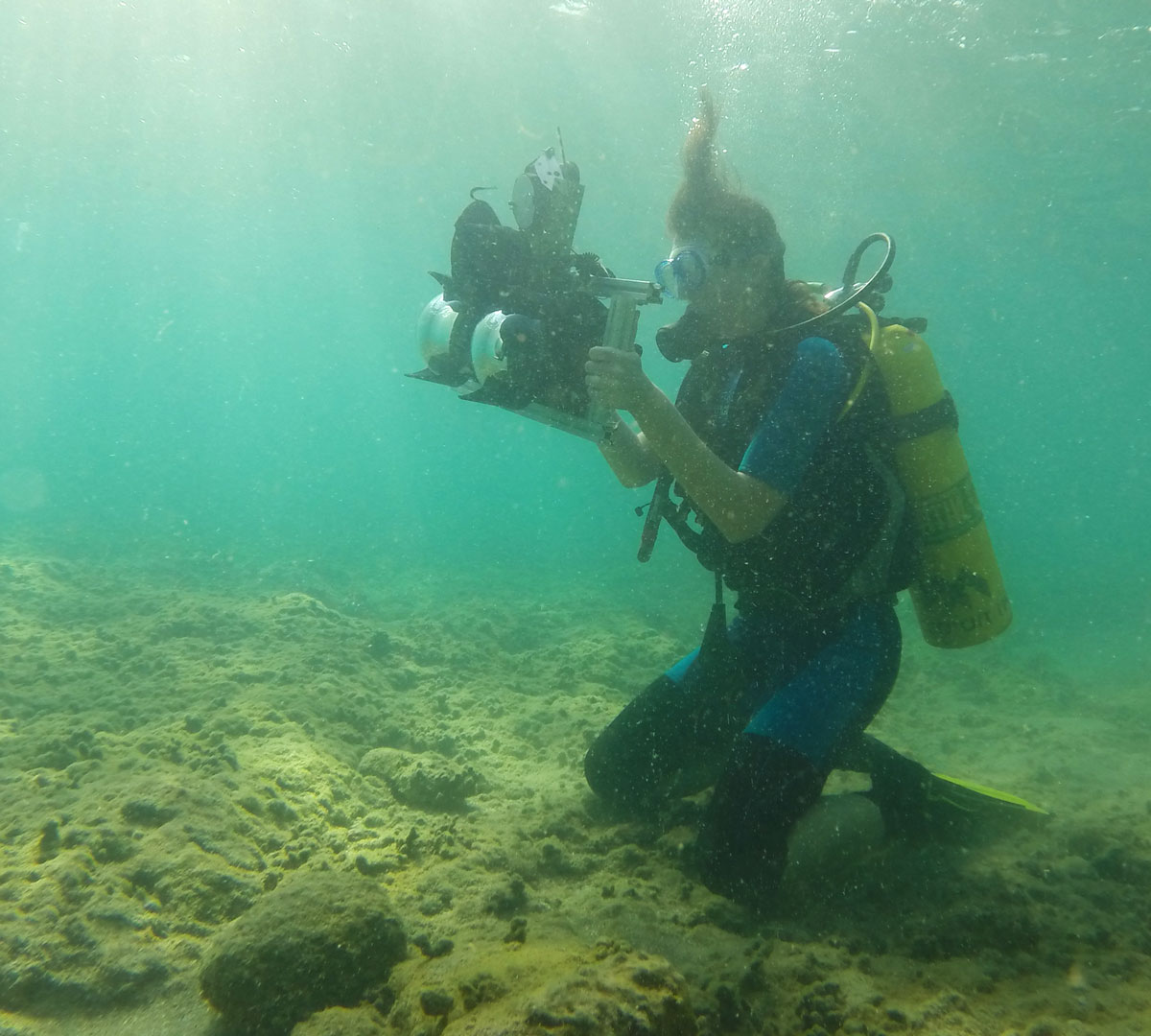
Underwater images suffer from color distortion and low contrast. This is because light is attenuated as it propagates through water. The attenuation varies with wavelength and depends both on the properties of the water body in which the image was taken and the 3D structure of the scene, making it difficult to restore the colors. Existing single underwater image enhancement techniques either ignore the wavelength dependency of the attenuation, or assume a specific spectral profile. We propose a new method that takes into account multiple spectral profiles of different water types, and restores underwater scenes from a single image. We show that by estimating just two additional global parameters - the attenuation ratios of the blue-red and blue-green color channels - the problem of underwater image restoration can be reduced to single image dehazing, where all color channels have the same attenuation coefficients. Since we do not know the water type ahead of time, we try different parameter sets out of an existing library of water types. Each set leads to a different restored image and the one that best satisfies the Gray-World assumption is chosen. The proposed single underwater image restoration method is fully automatic and is based on a more comprehensive physical image formation model than previously used. We collected a dataset of real images taken in different locations with varying water properties and placed color charts in the scenes. Moreover, to obtain ground truth, the 3D structure of the scene was calculated based on stereo imaging. This dataset enables a quantitative evaluation of restoration algorithms on natural images and shows the advantage of the proposed method.
Publication
Diving into Haze-Lines: Color Restoration of Underwater Images. Berman, D. and Treibitz, T. and Avidan S., British Machine Vision Conference (BMVC) 2017


Source Code
The code is provided under this license agreement. 
This code has minor changes compared to the results in the paper.
Dataset
Update: A large scale dataset is available here.
The raw images from the figures in the paper are available for download.
We highly recommend converting them using this camera pipeline.
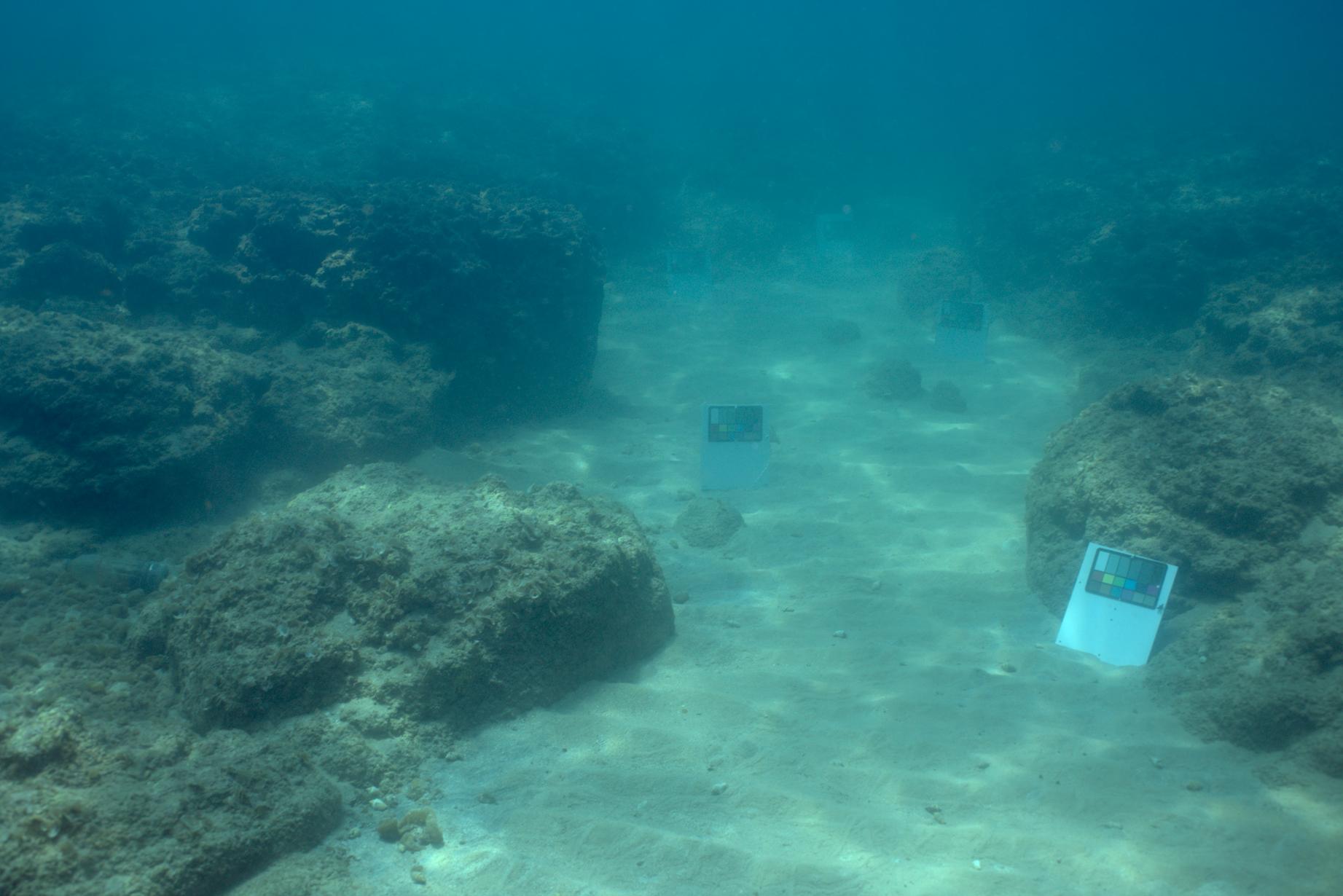
Mediterranean Sea, Nachsholim Beach.
Depth: 5m. Date: April 19th, 2017. Time: 12 noon.
Download links: raw image, estimated 3-channel transmission and attenuations coeffs.
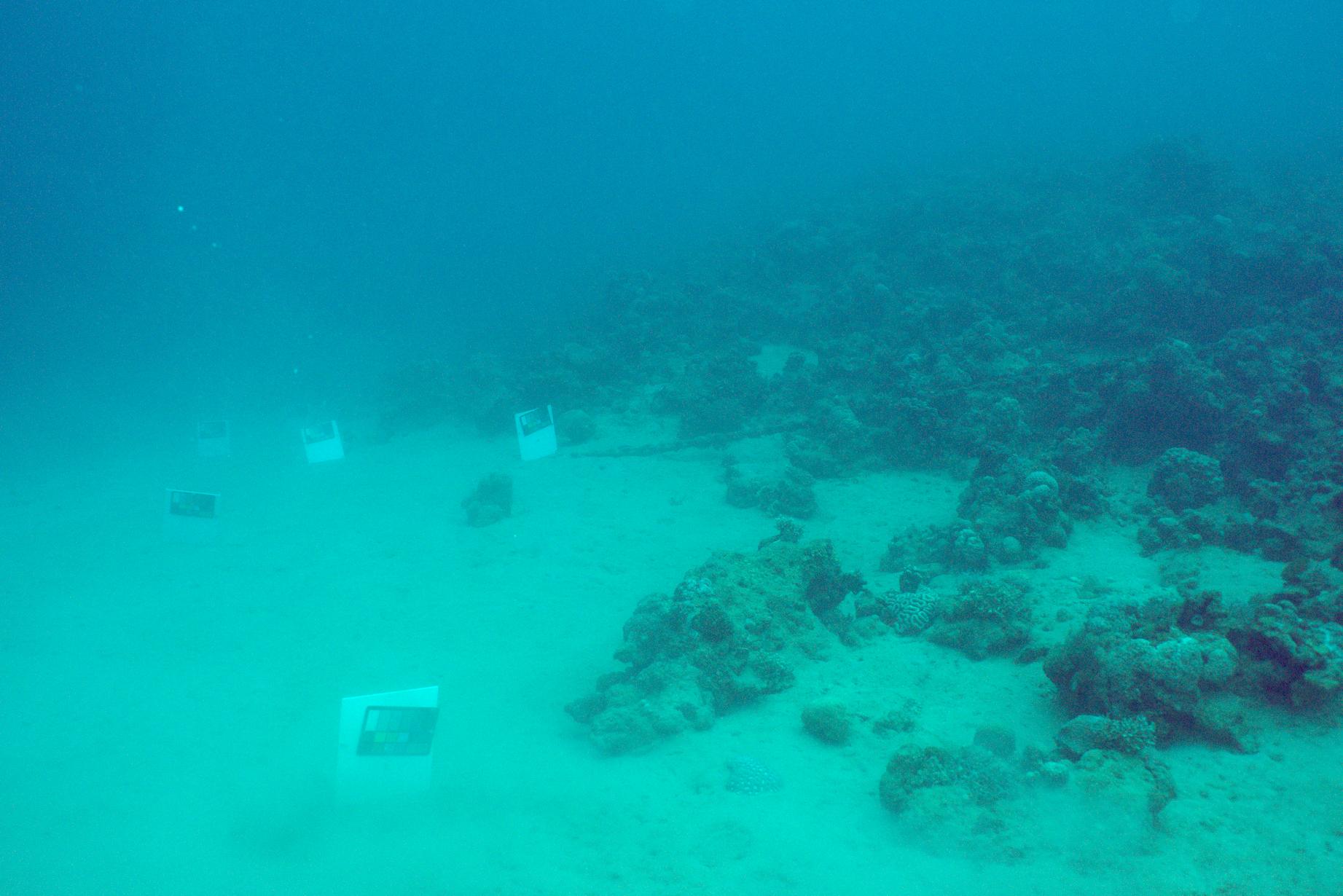
Red Sea, Dekel Beach.
Depth: 20m. Date: December 22nd, 2016. Time: 9:38AM.
Download links: raw image, estimated 3-channel transmission and attenuations coeffs.
Supplementary Material
We show here additional results that were not included in the paper for lack of space.
Some of the results from the paper are included here as well, since we find it easier to compare
images in this interface.
We present results both on RAW and JPEG input images.
To switch between images please use the colored buttons on the left.
Please note that the result images are initialized to our results.
A complete list of references is given at the end.
Input: Raw Images
The transmission maps are displayed along with the images. They are color-mapped: warm colors indicate high values, while cold color indicate low values.
Please note that the buttons on the left switch both the image and the transmission map.
In order to increase contrast, as well as for methods by Ancuti et al., no transmission map is estimated.
Fig. 3
High resolution images. Note that the transmission and the distance have different scales.
|
Restoration Methods
|
Input Image
Output Image 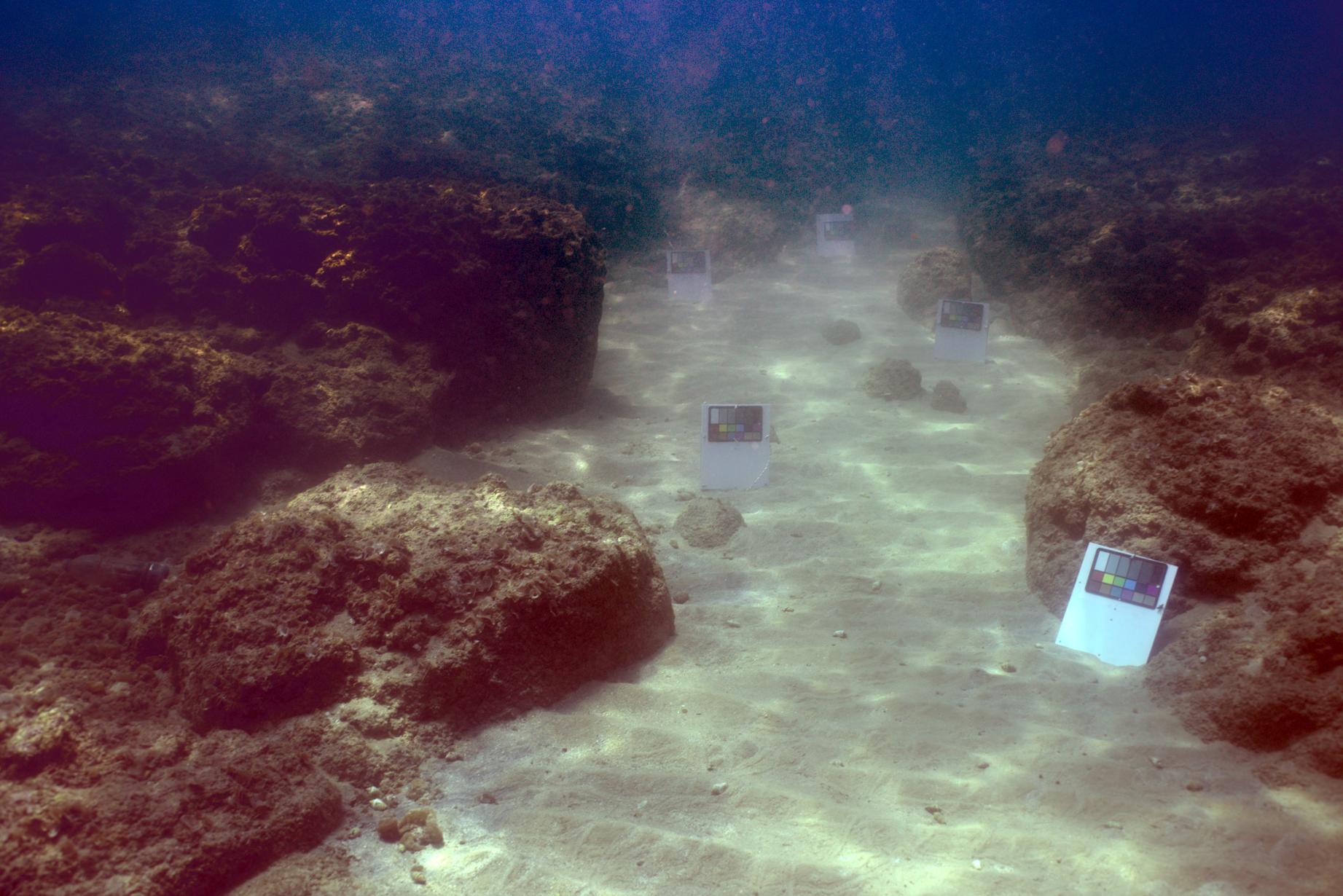
|
True distance based on stereo
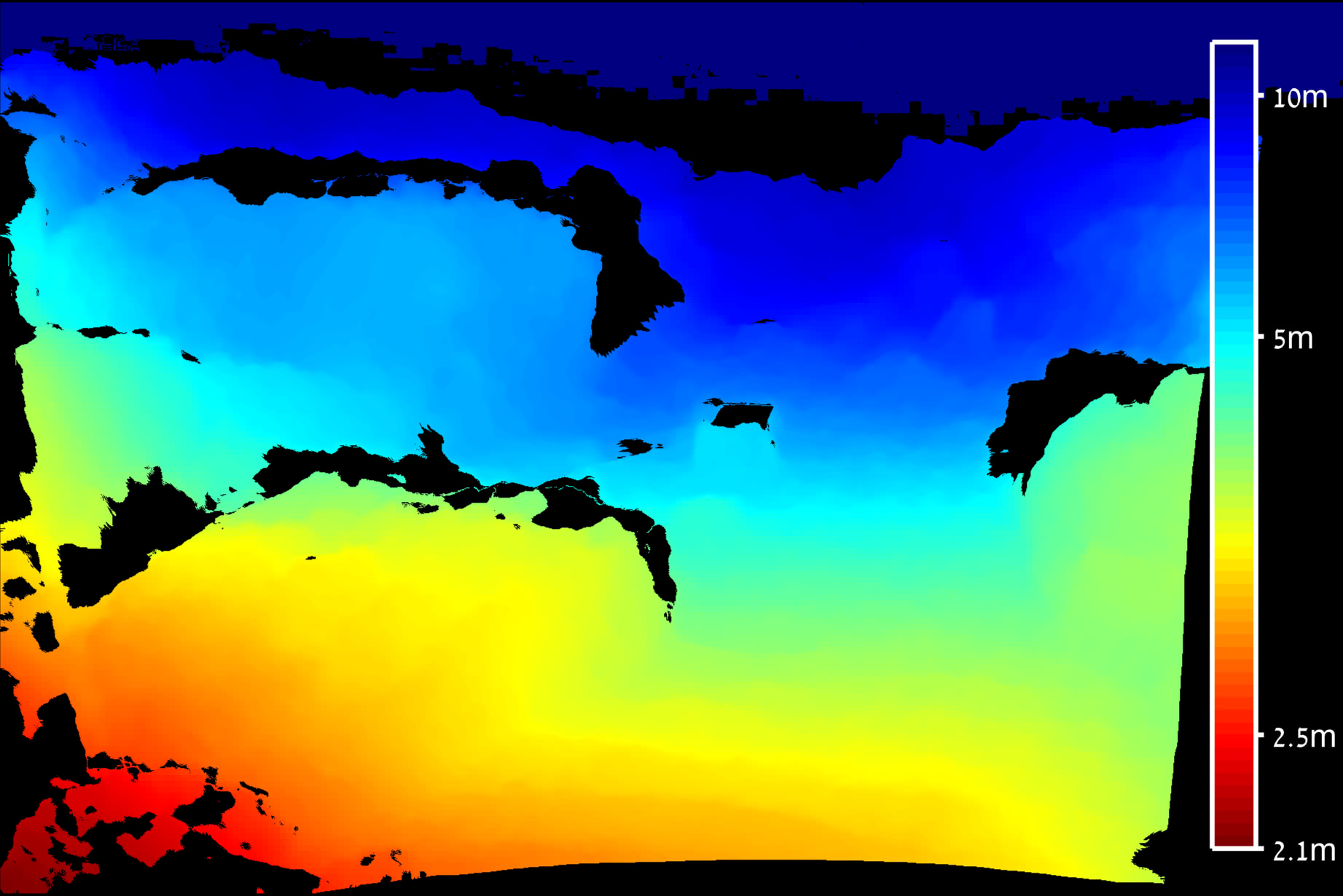
Output Transmission Map 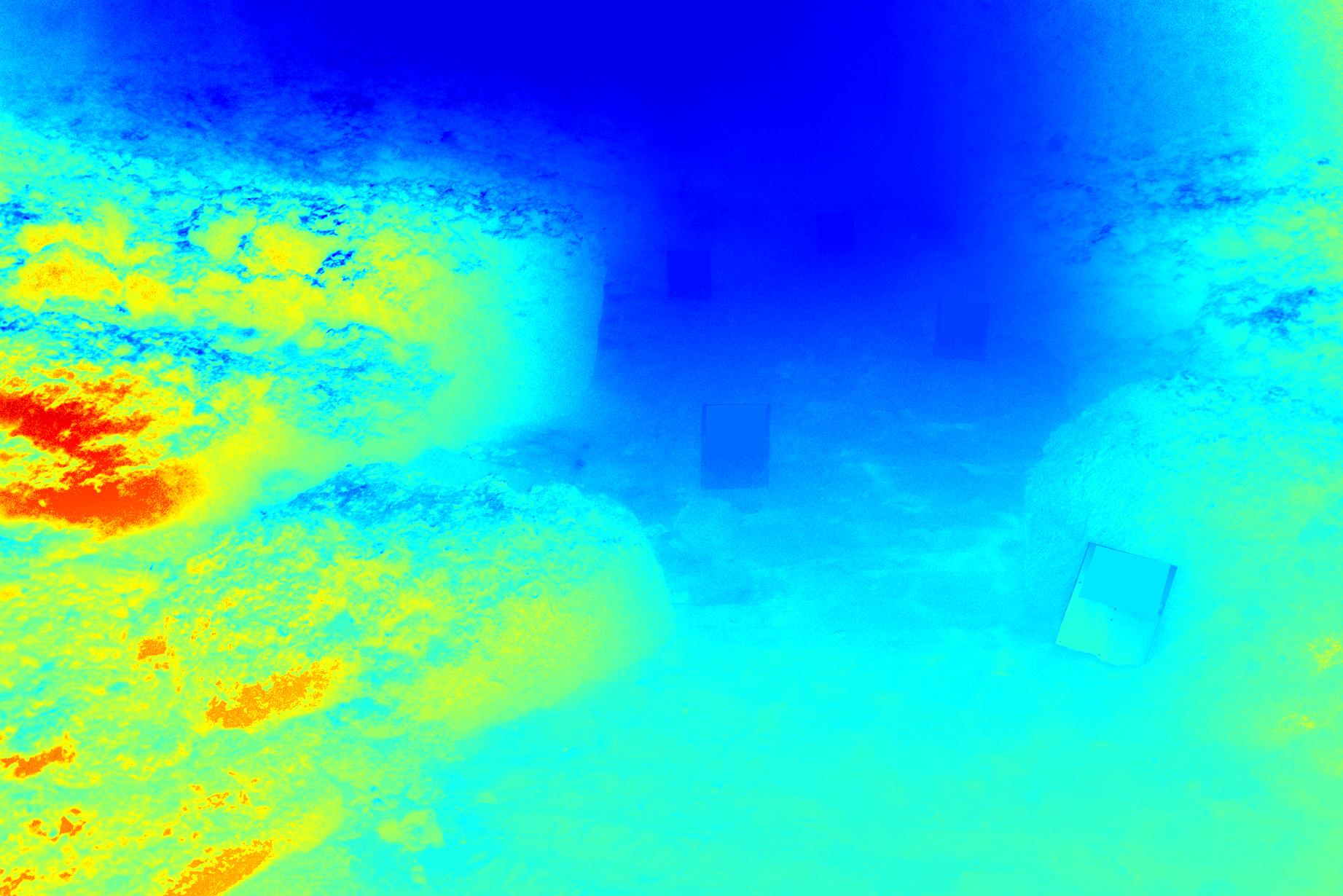
|
Fig. 4
High resolution images. Note that the transmission and the distance have different scales.
|
Restoration Methods
|
Input Image
Output Image 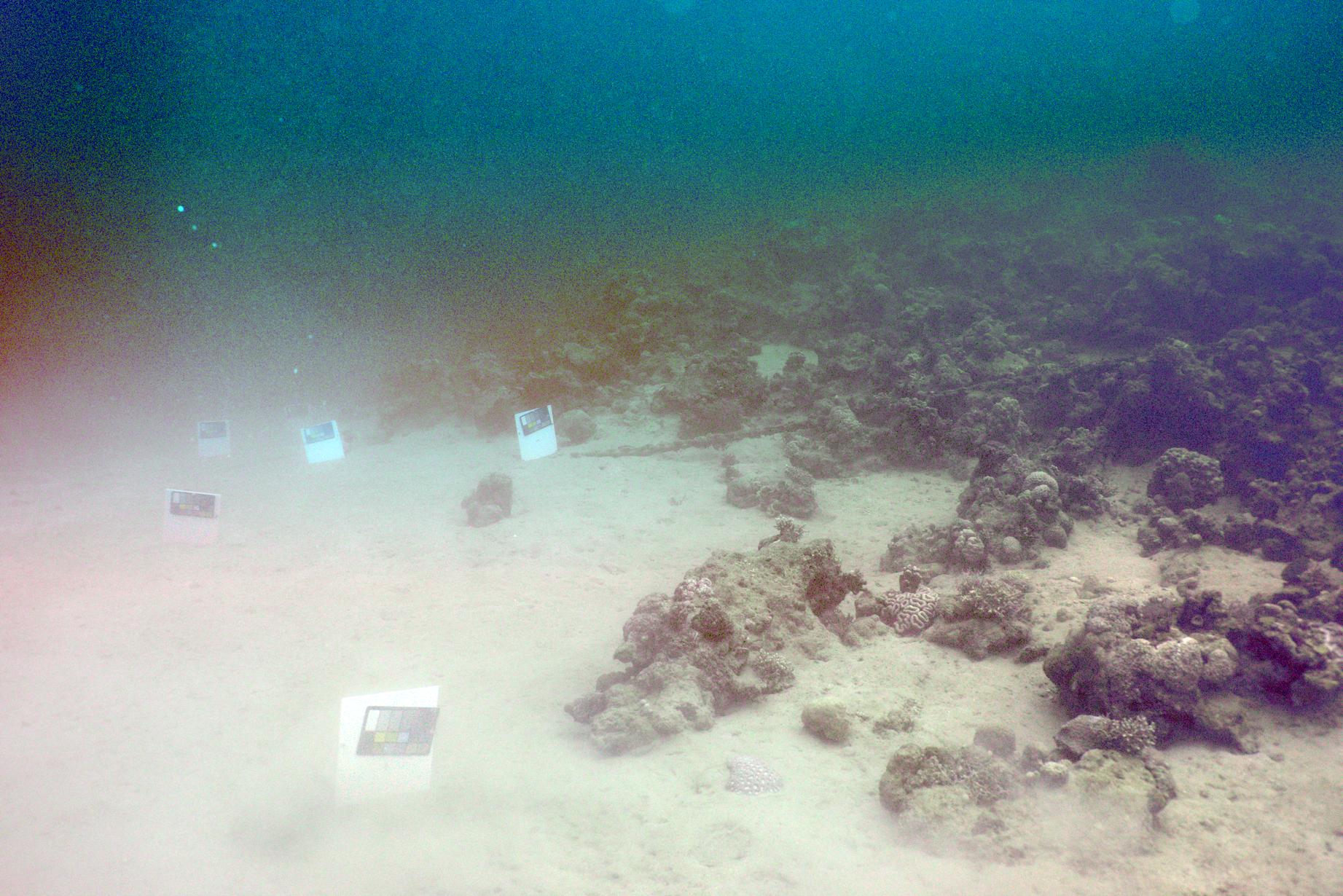
|
True distance based on stereo
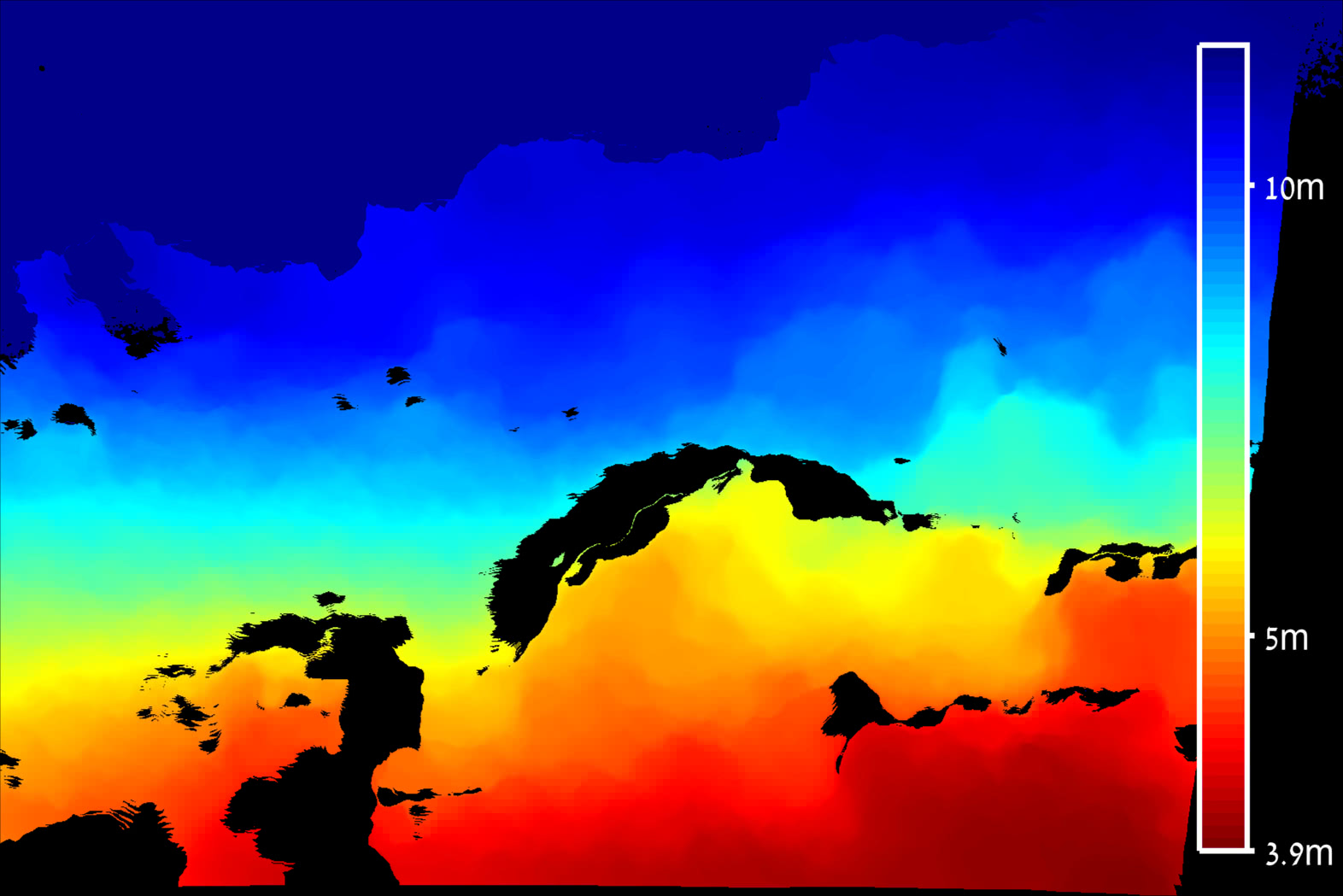
Output Transmission Map 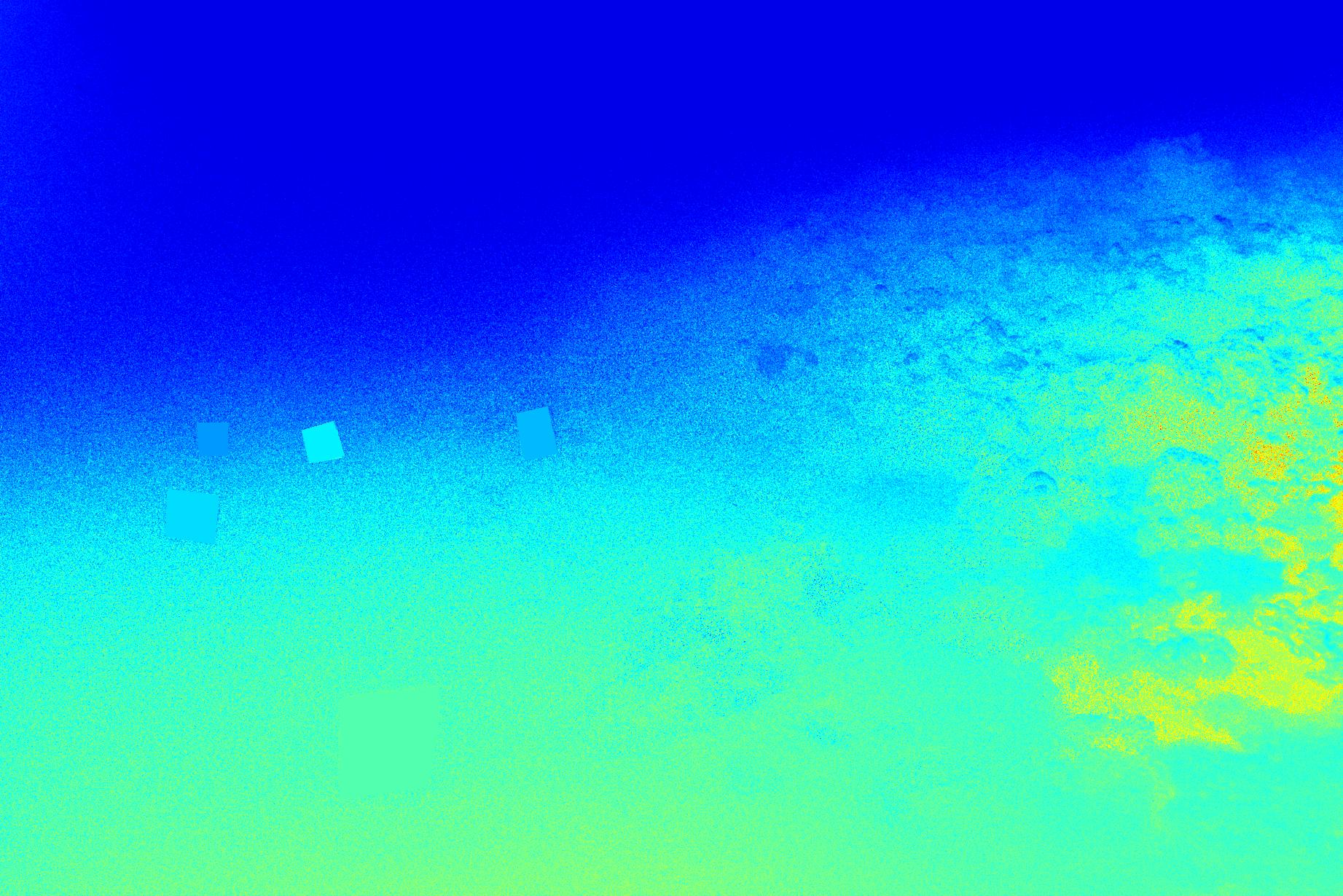
|
Corals
Notice that applying contrast enhancement corrects the colors of the foreground colors, while leaving the ones in the background blue.
In contrast, the proposed method removes the blue hue from the objects that are further away from the camera.
|
Restoration Methods
|
Input Image 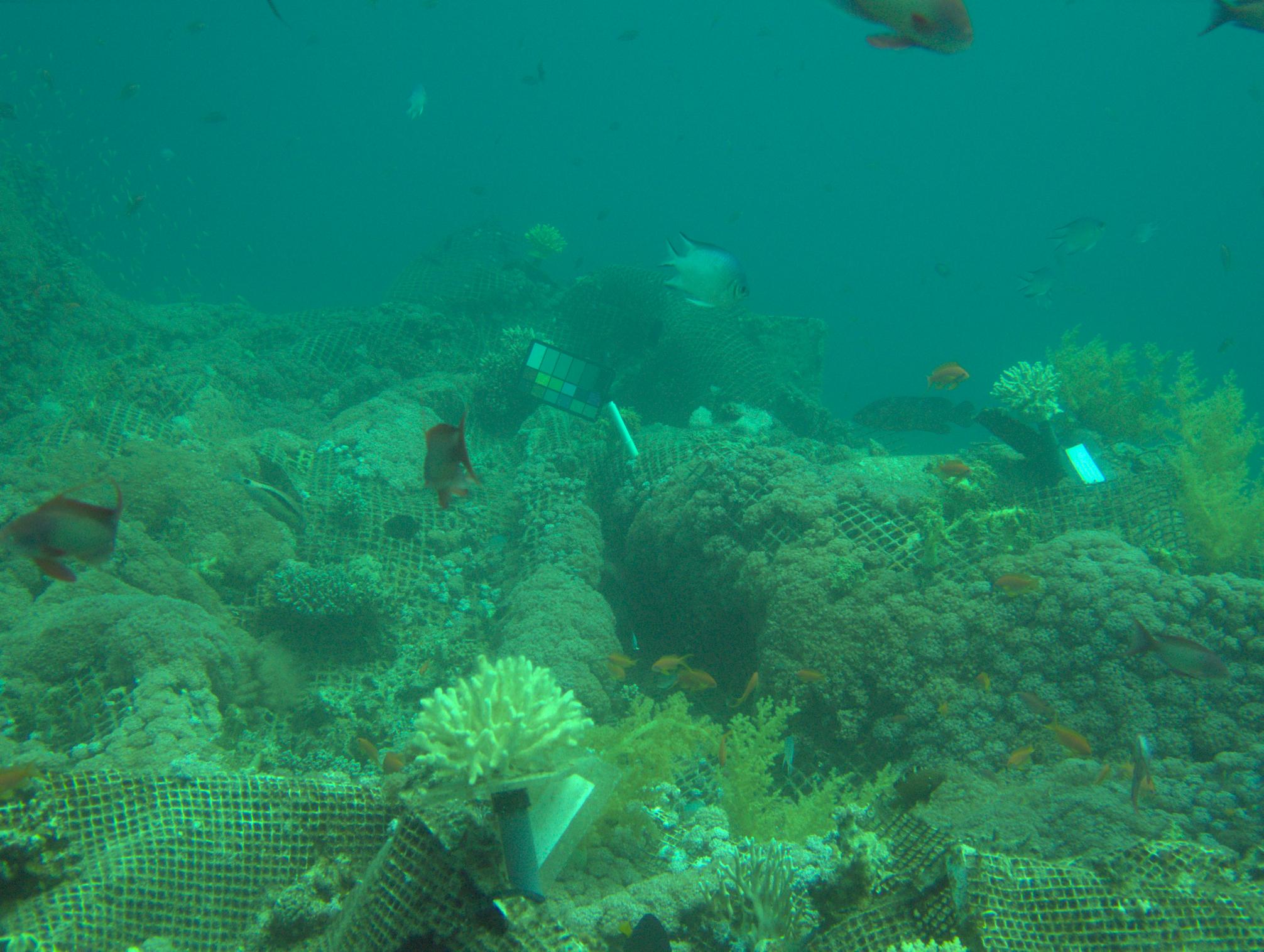 Output Image 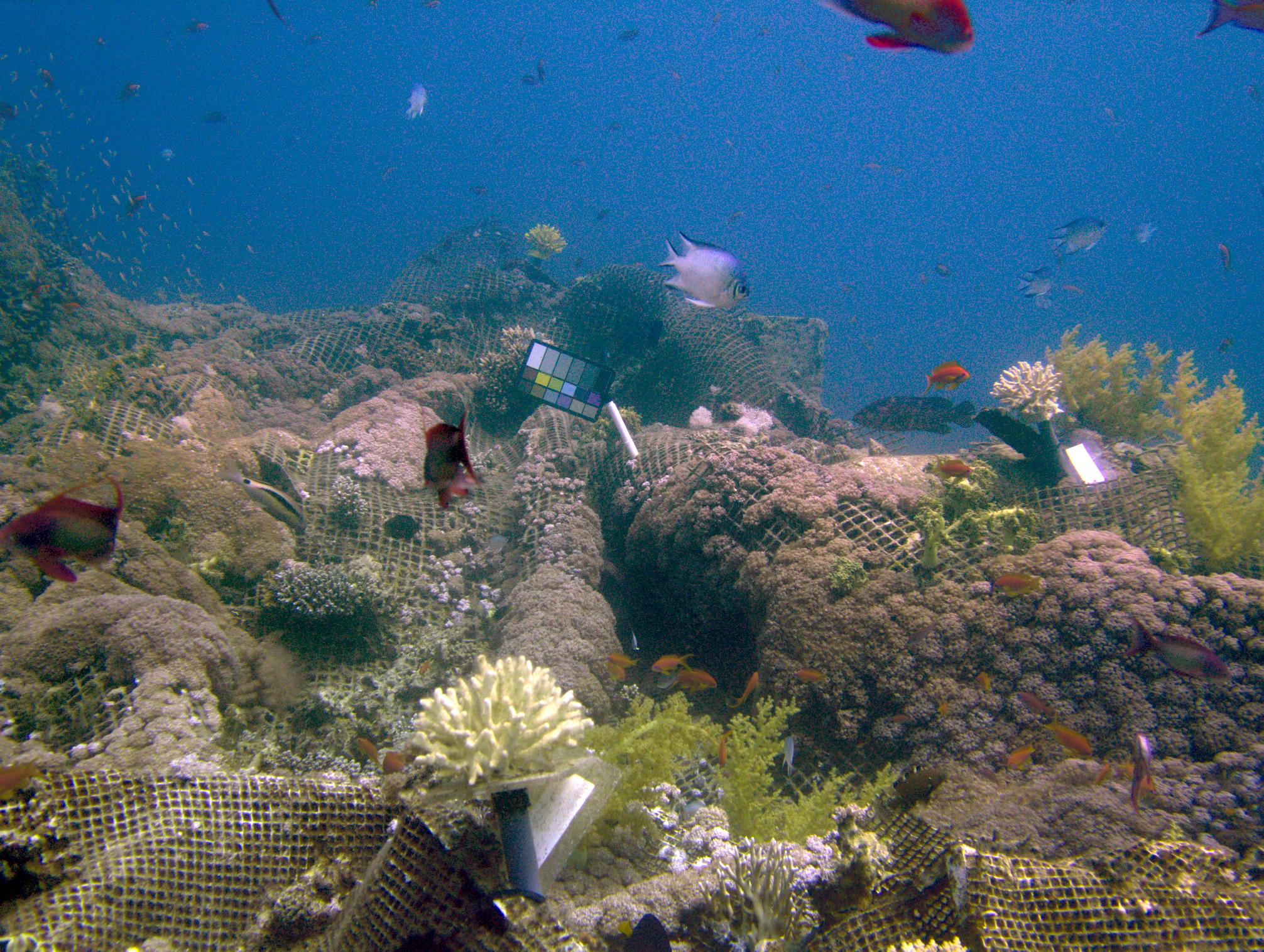 |
Output Transmission Map 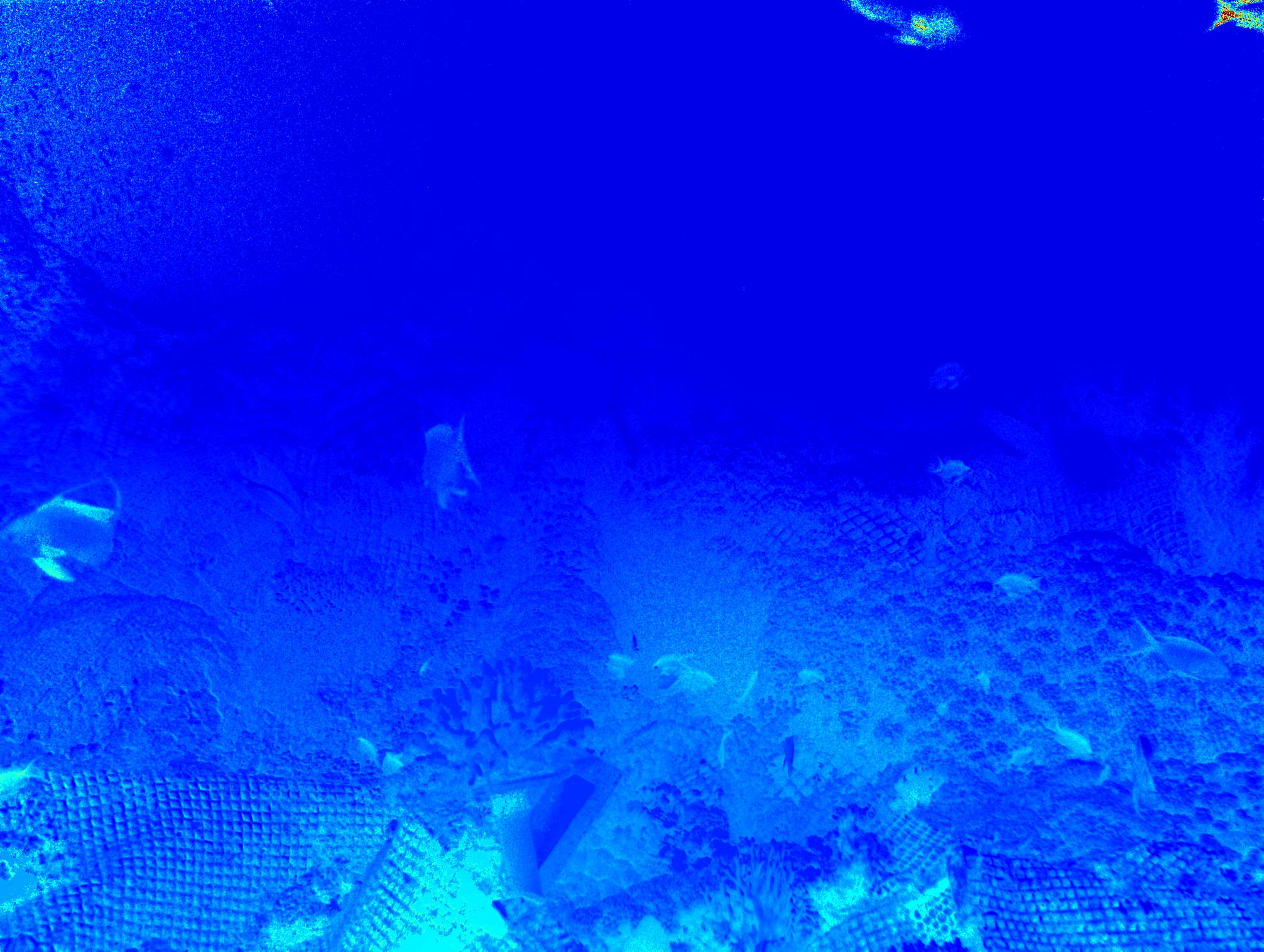 |
Rocks
Dark Channel Prior-based methods fail in this case, since the prior is does not hold on the bright sand in the foreground.
The table shows the median angle in RGB space between the neutral patches in each of the two color charts and a pure white [1,1,1] (in degrees). Lower is better.
|
Restoration Methods
|
Input Image
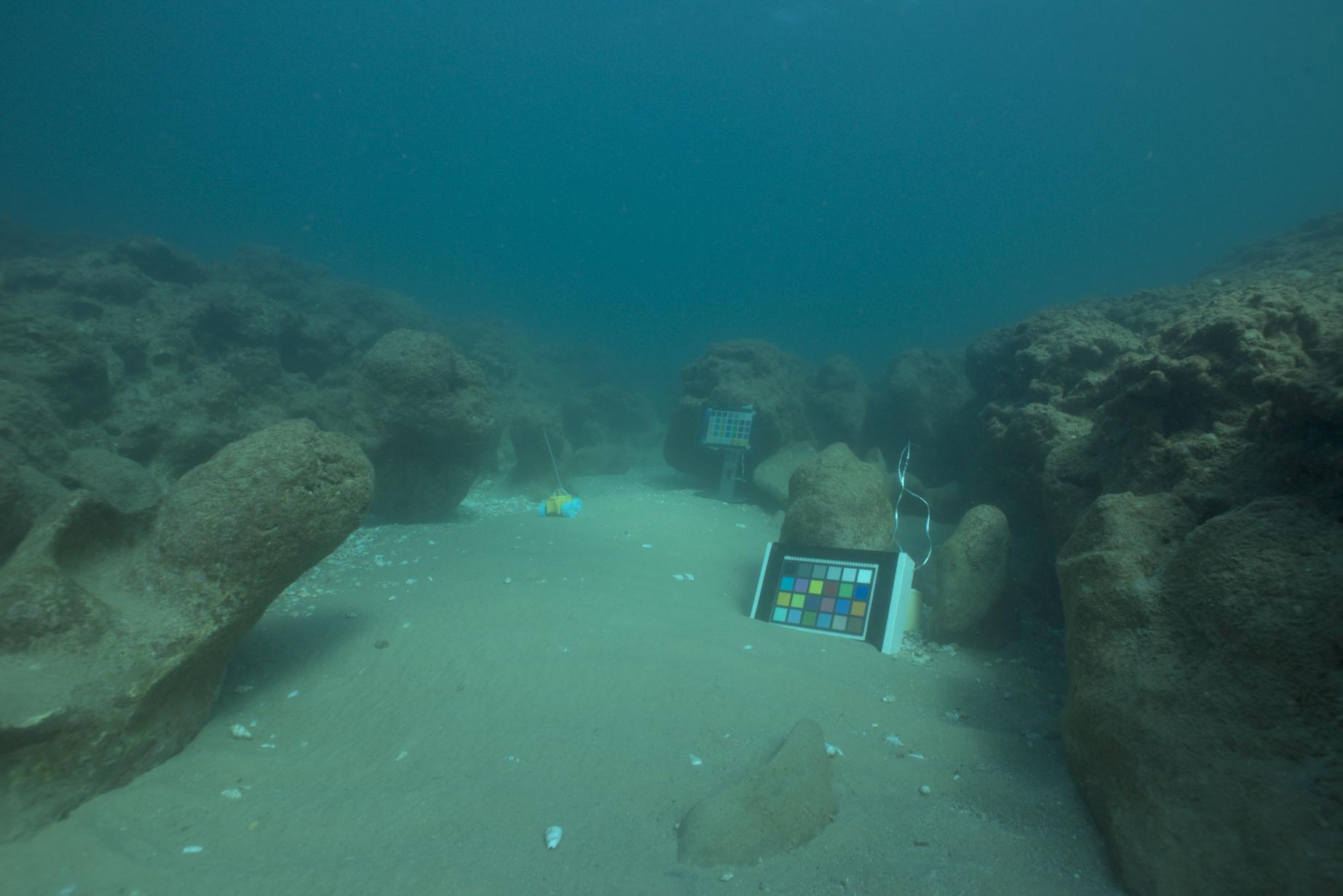
Output Image 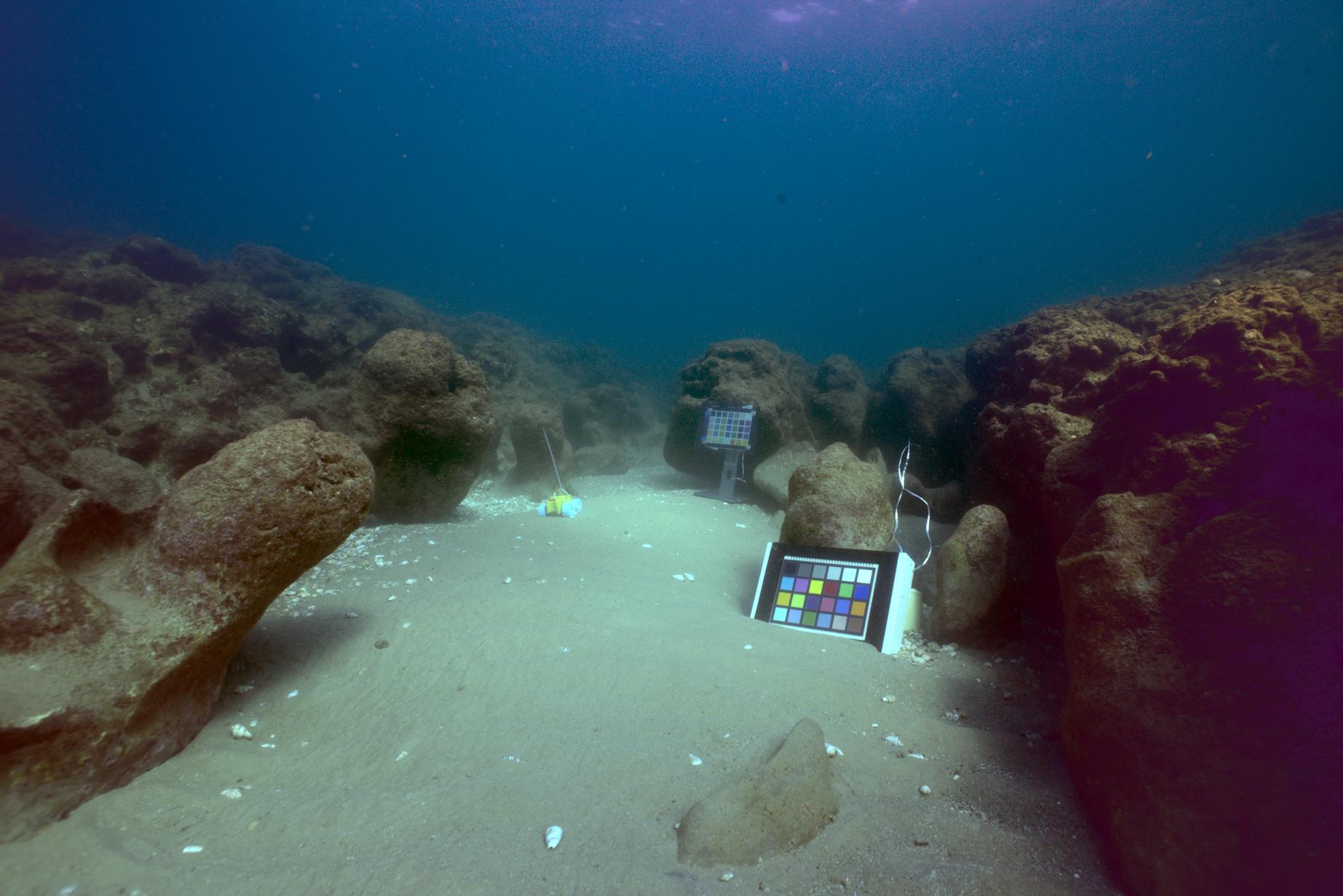
|
Output Transmission Map 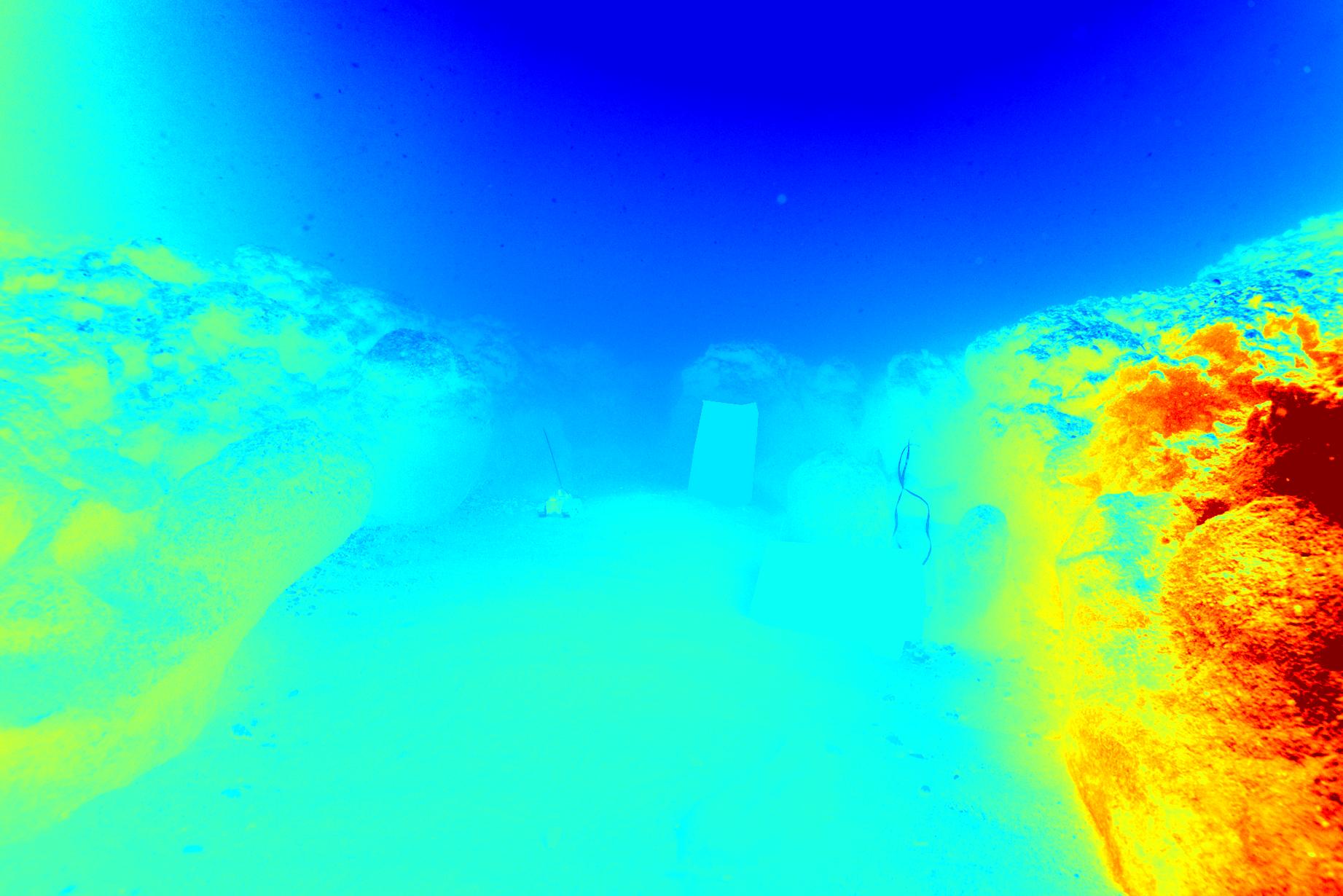
|
Structures
|
Restoration Methods
|
Input Image
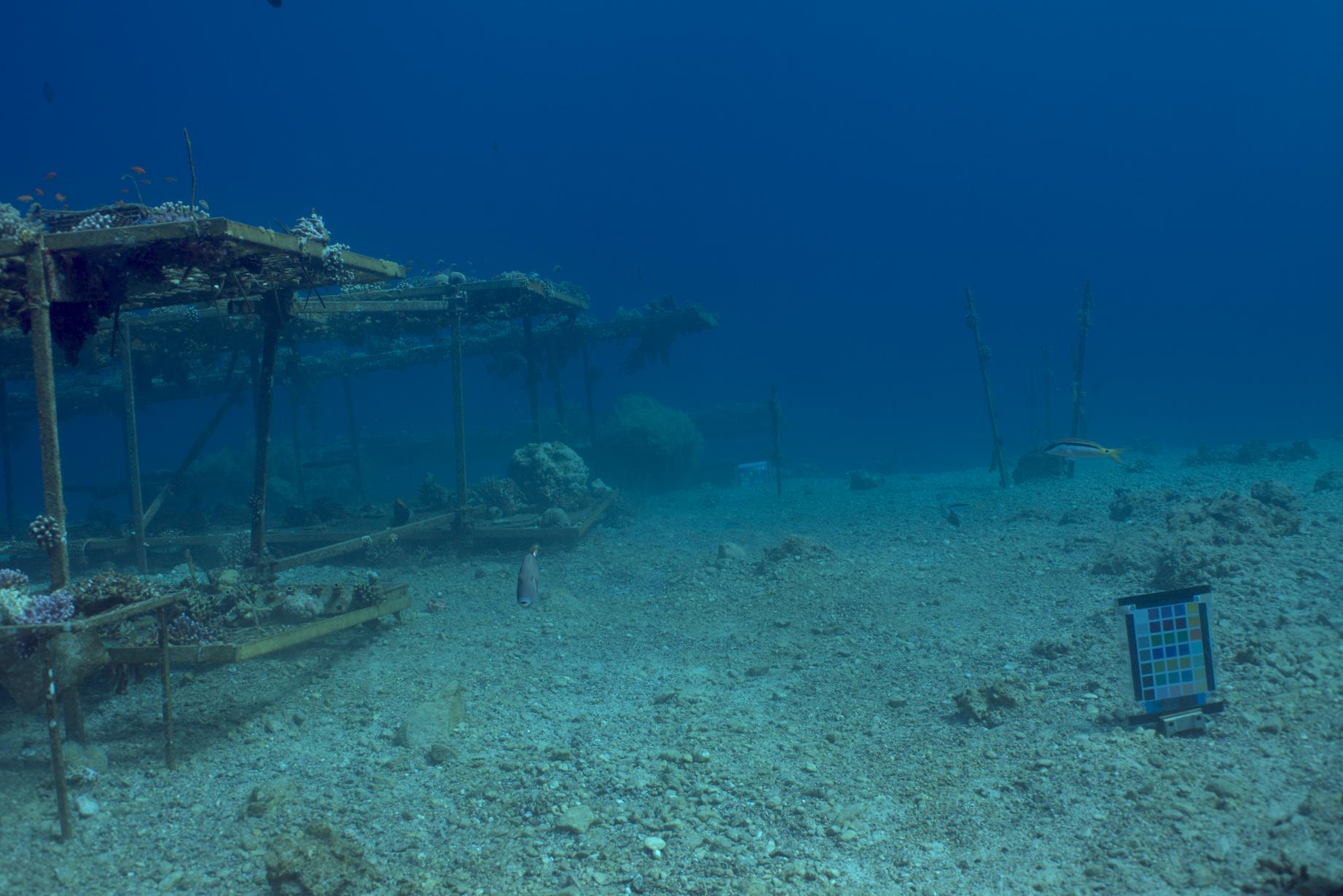
Output Image 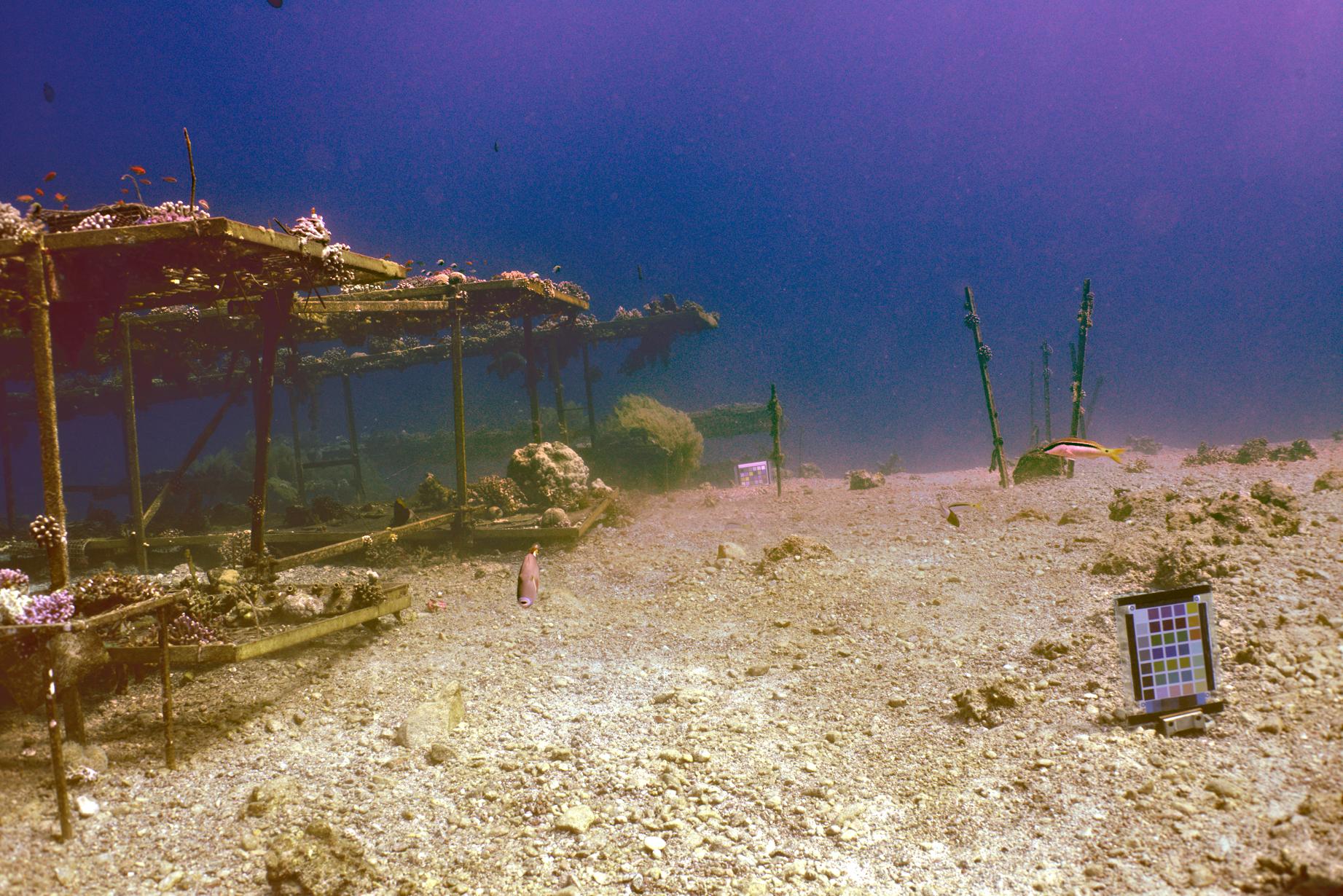
|
Output Transmission Map 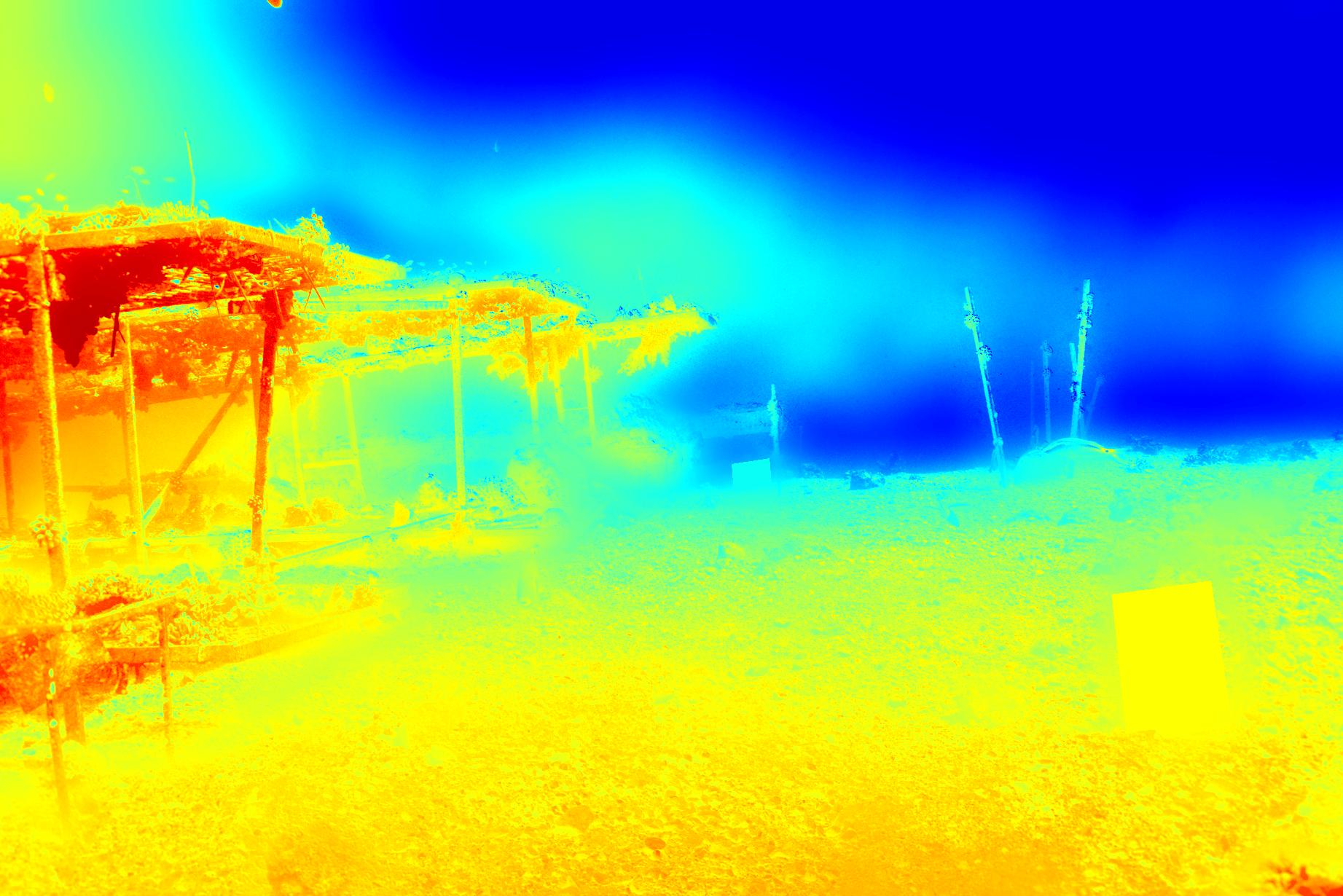
|
Structures - different angle
|
Restoration Methods
|
Input Image
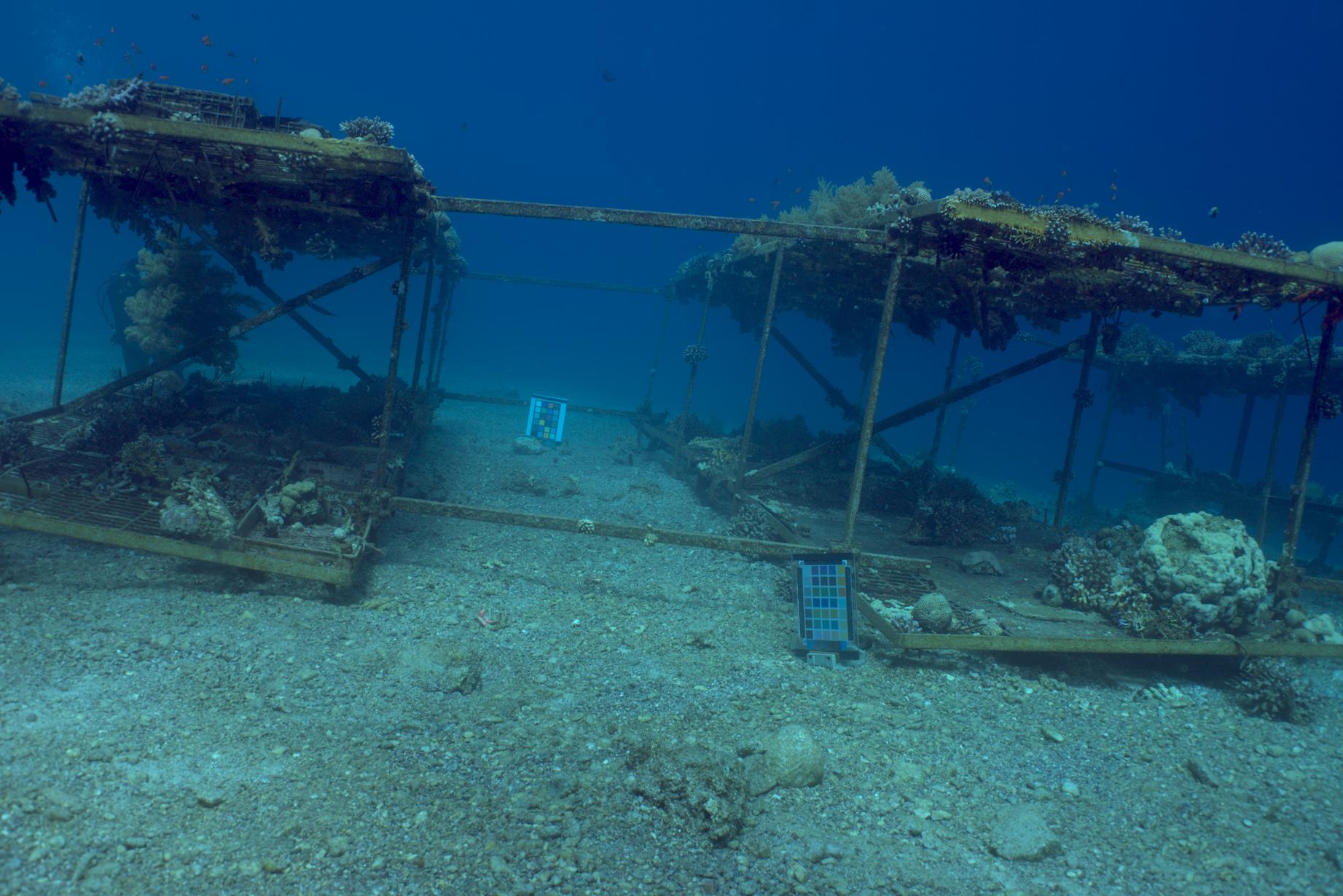
Output Image 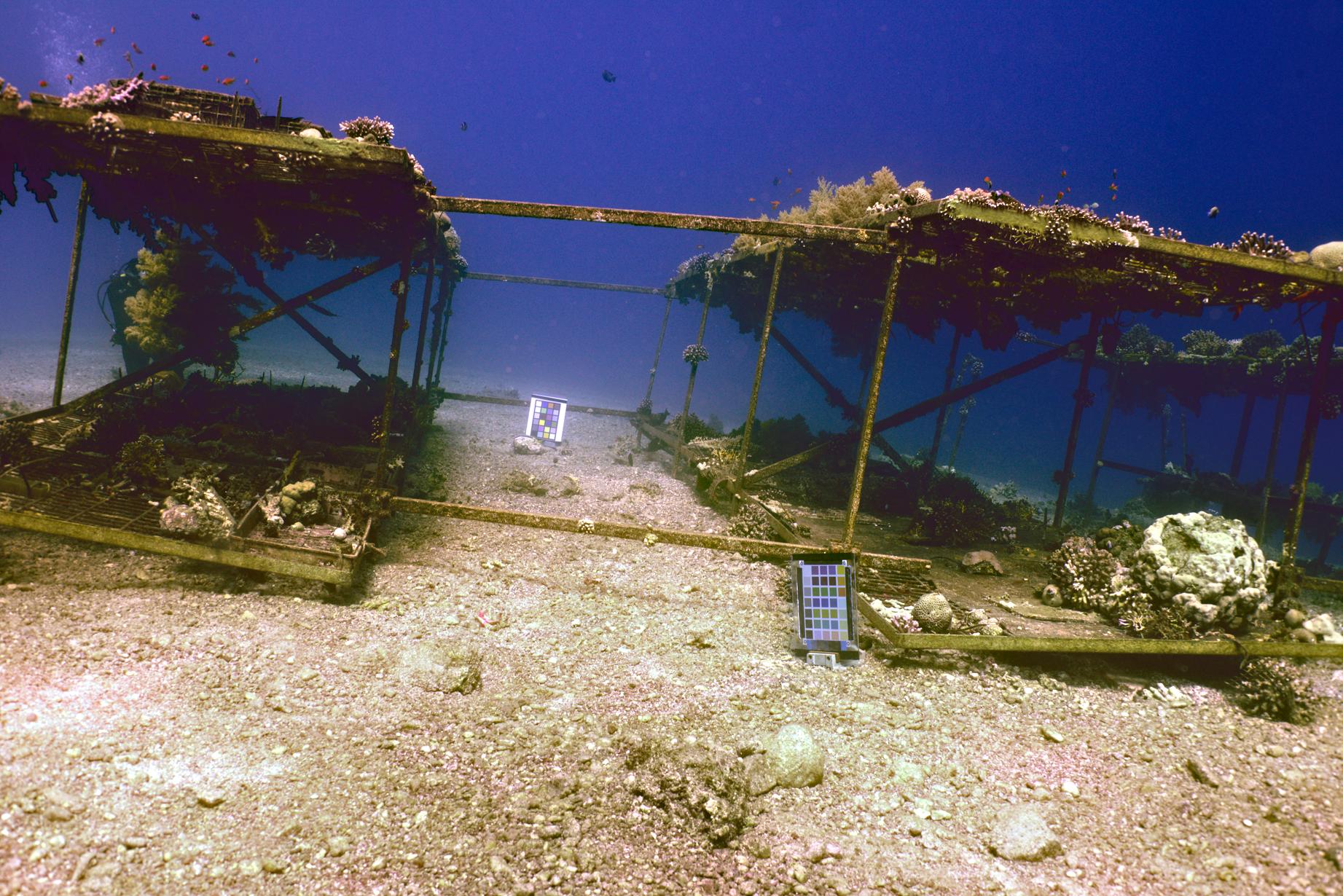
|
Output Transmission Map 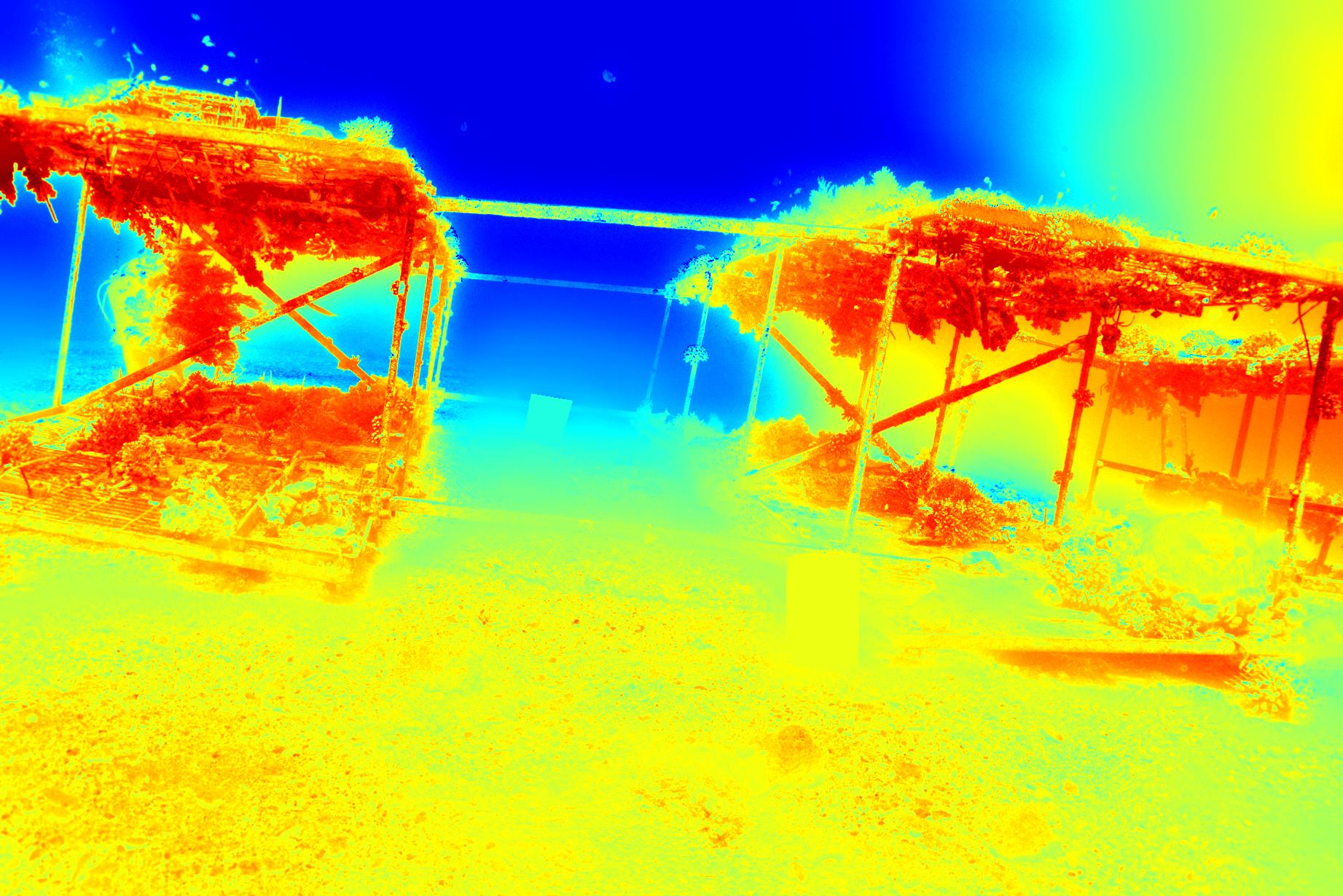
|
Input: JPEG Images
Coral Reef
|
Restoration Methods
|
Input Image 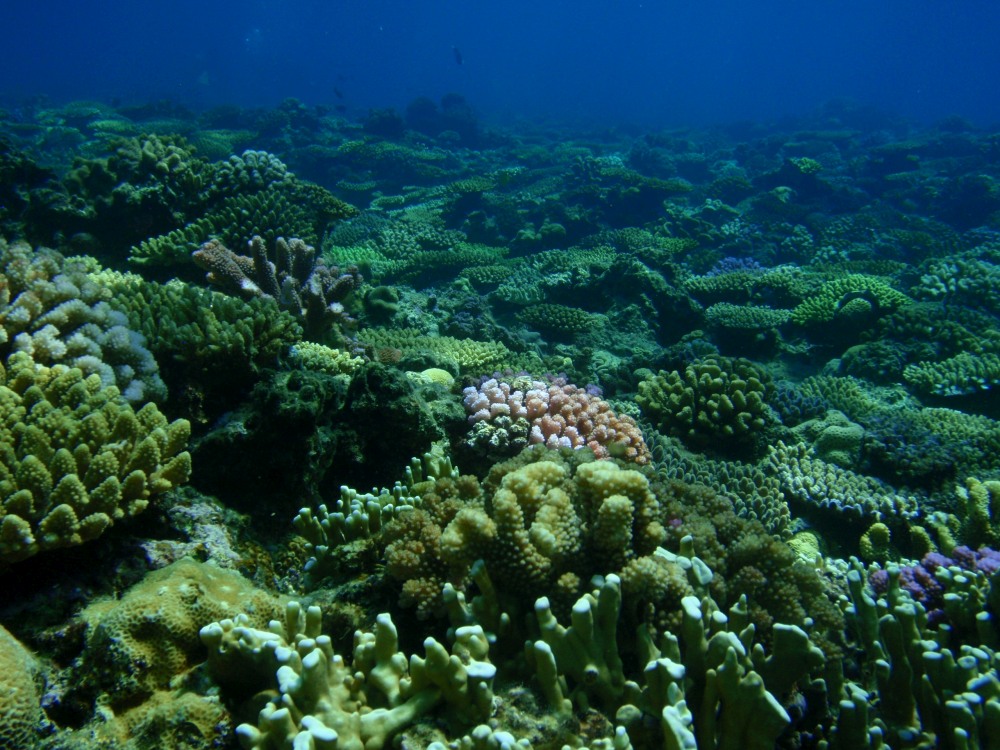 Output Image 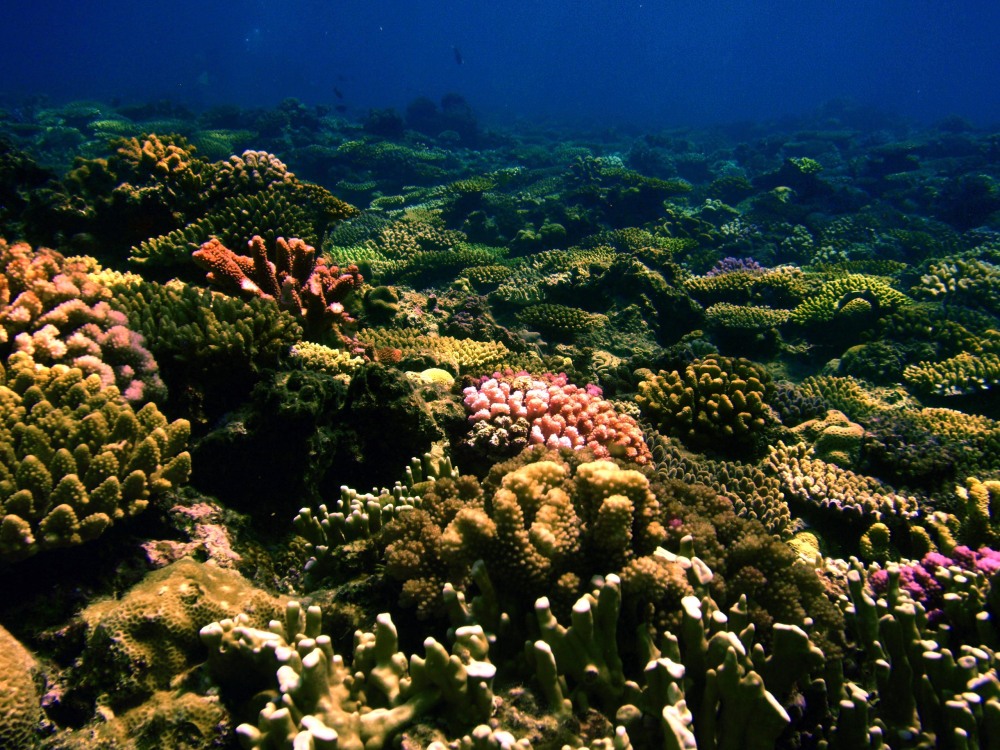 |
Output Transmission Map 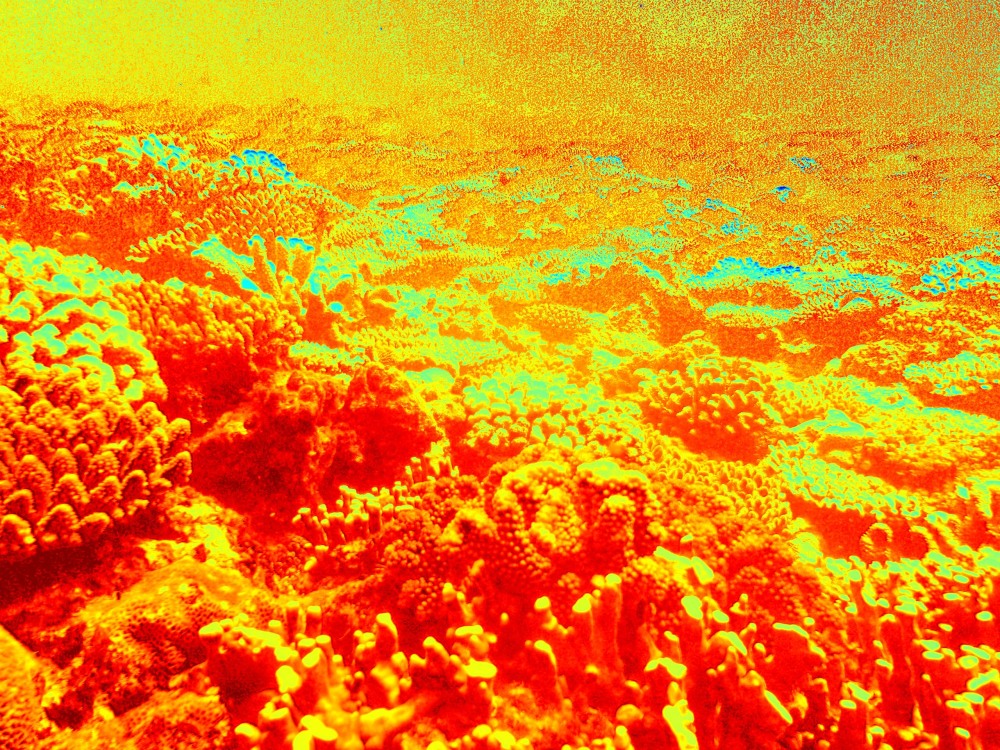 |
Stripe Damselfish
Our method is able to remove the blue color cast on the coral in the background, as well as the sand.
|
Restoration Methods
|
Output Image 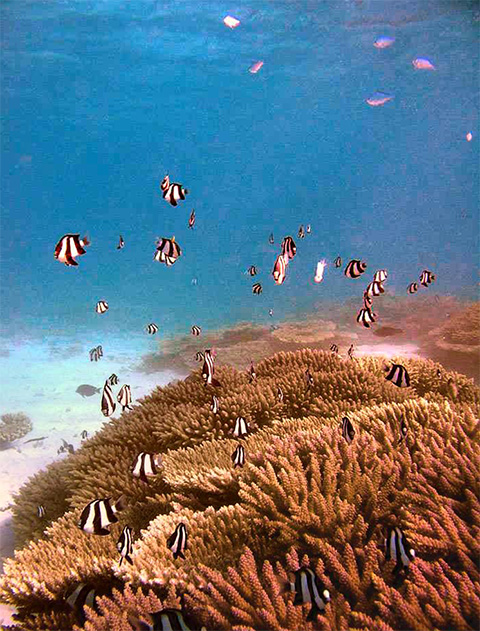 |
Input Image 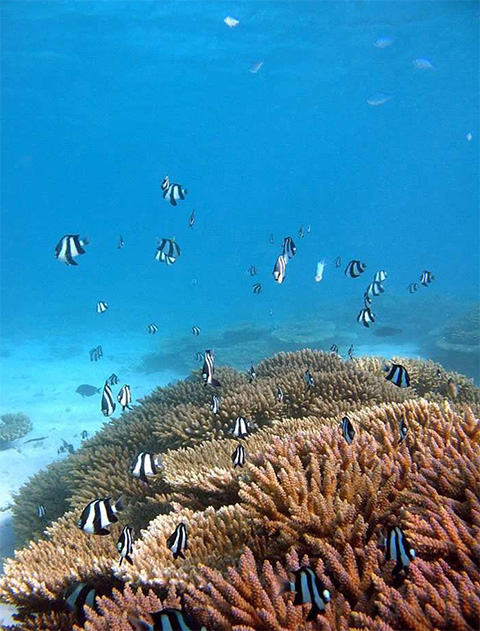 |
Submerged vessel with diver
Our method is able to remove the blue color cast from the farther part of the ship on the right.
|
Restoration Methods
|
Output Image 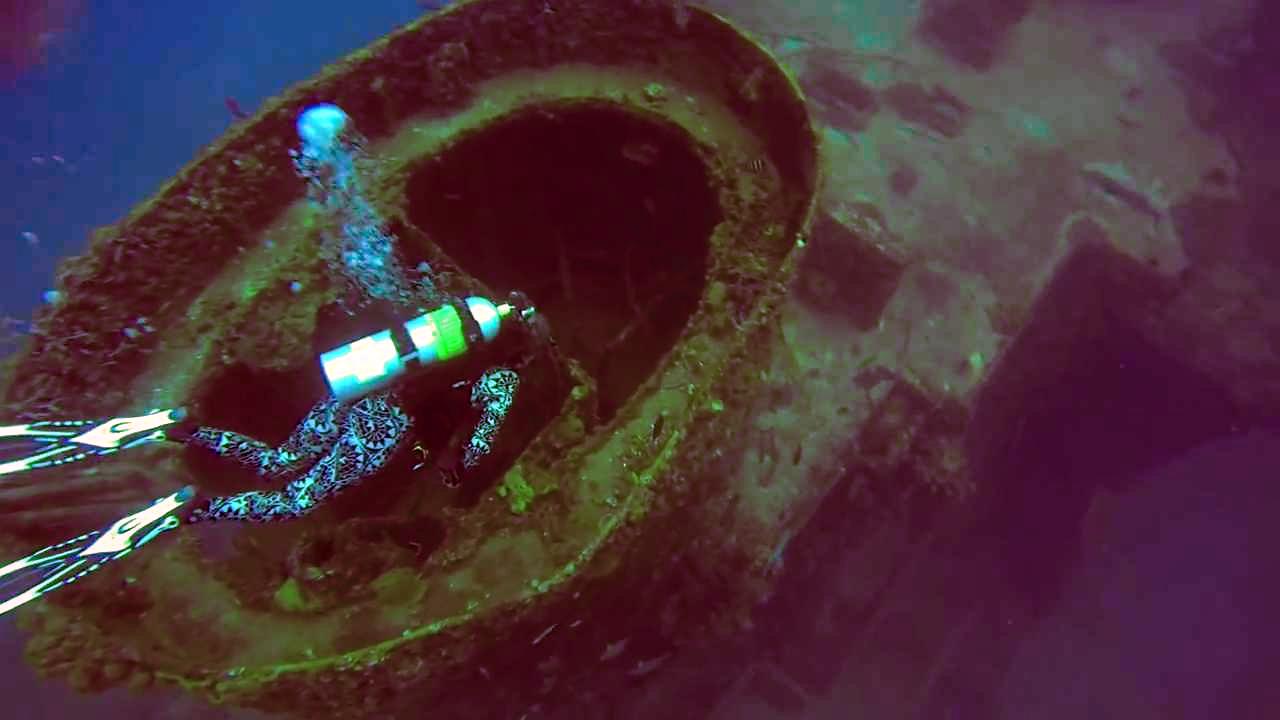 |
Input Image 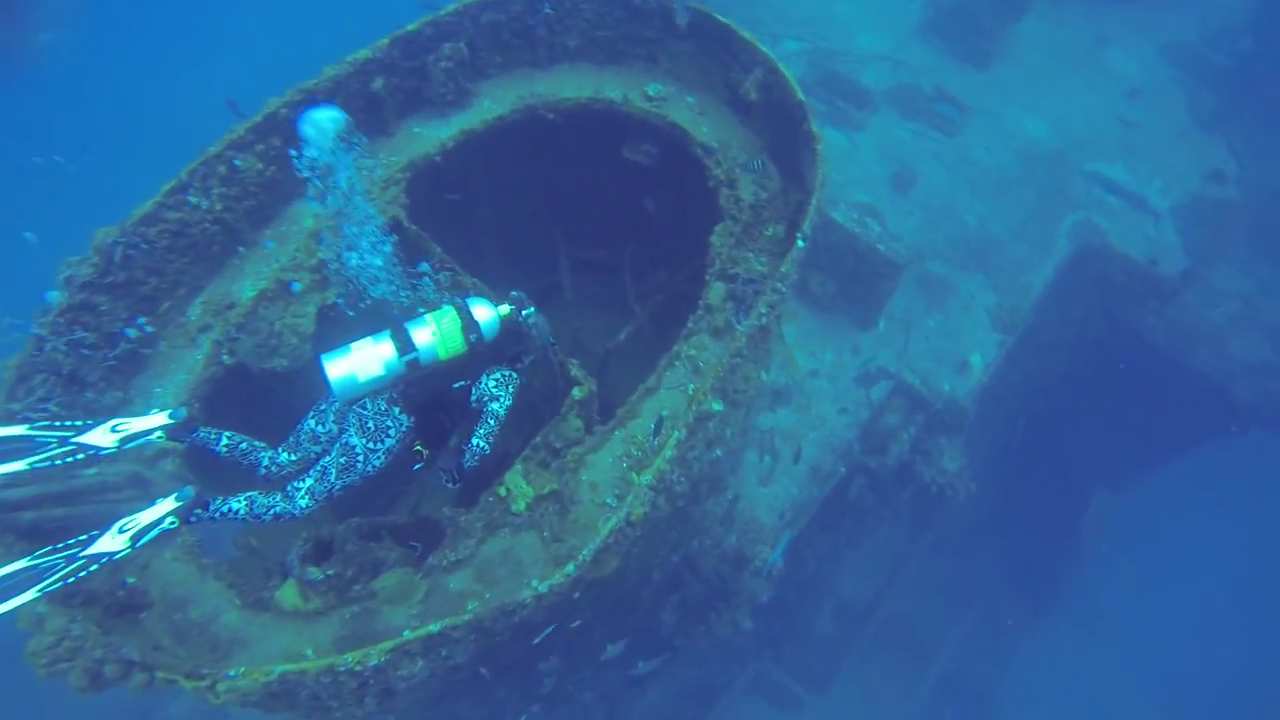 |
Coral reef
While most methods fail to remove the blue color cast of the background, our methods produce realistic colors with excellent contrast in the foreground.
* The result of [Ancuti et al. 2016] is shown in low resolution, we could not find a high-resolution image.
Input Image 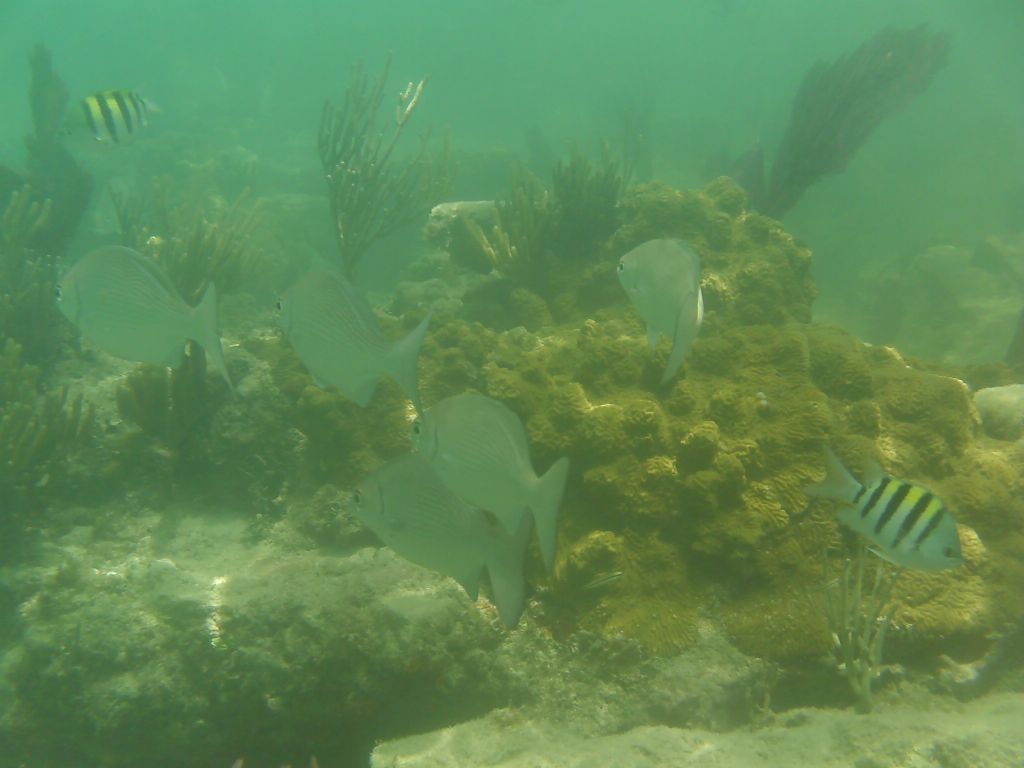 |
|
|
Restoration Methods
|
Output Image 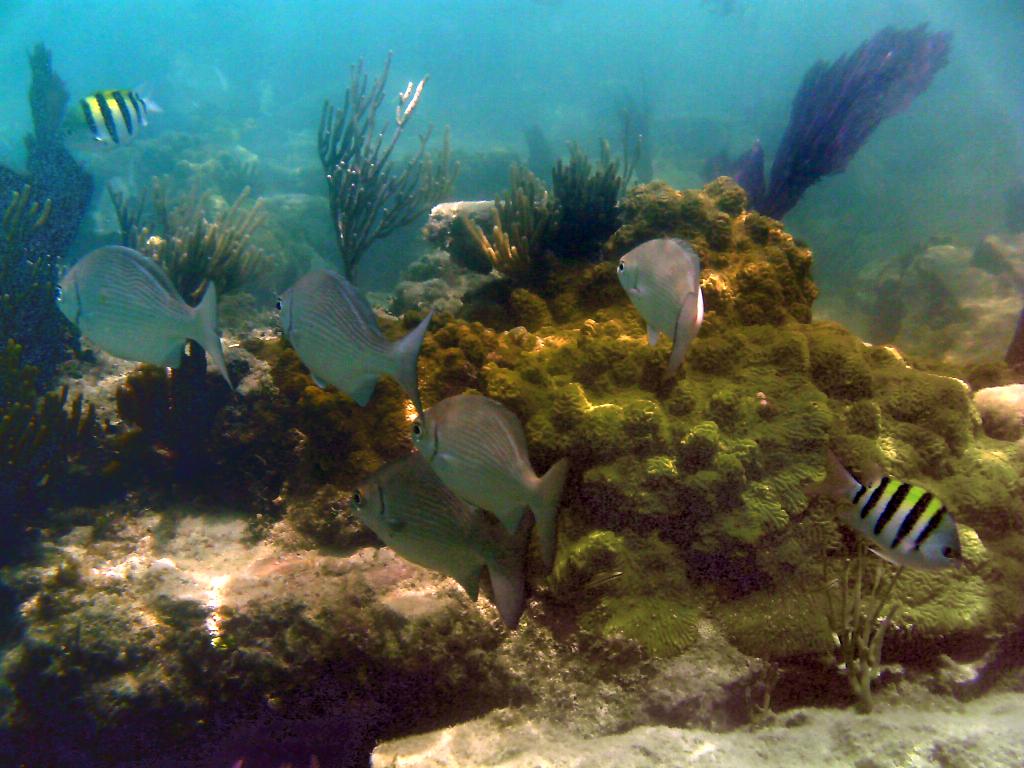 |
Coral reef
None of the methods is able to completely remove the color cast of the farther reef at the top-left.
* The result of [Ancuti et al. 2016] is shown in low resolution, we could not find a high-resolution image.
Input Image 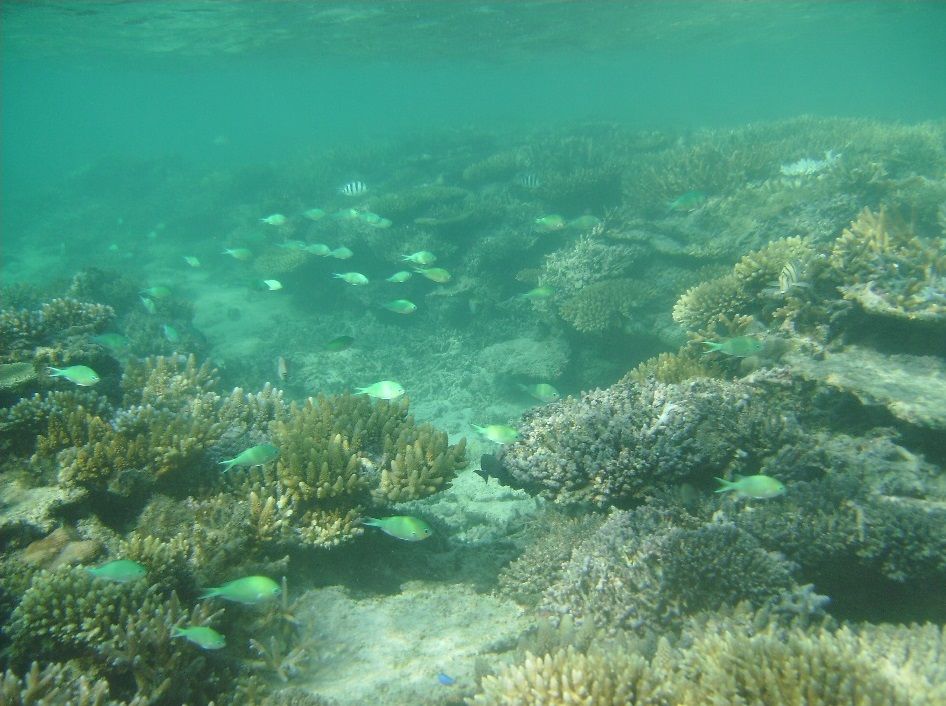 |
|
|
Restoration Methods
|
Output Image 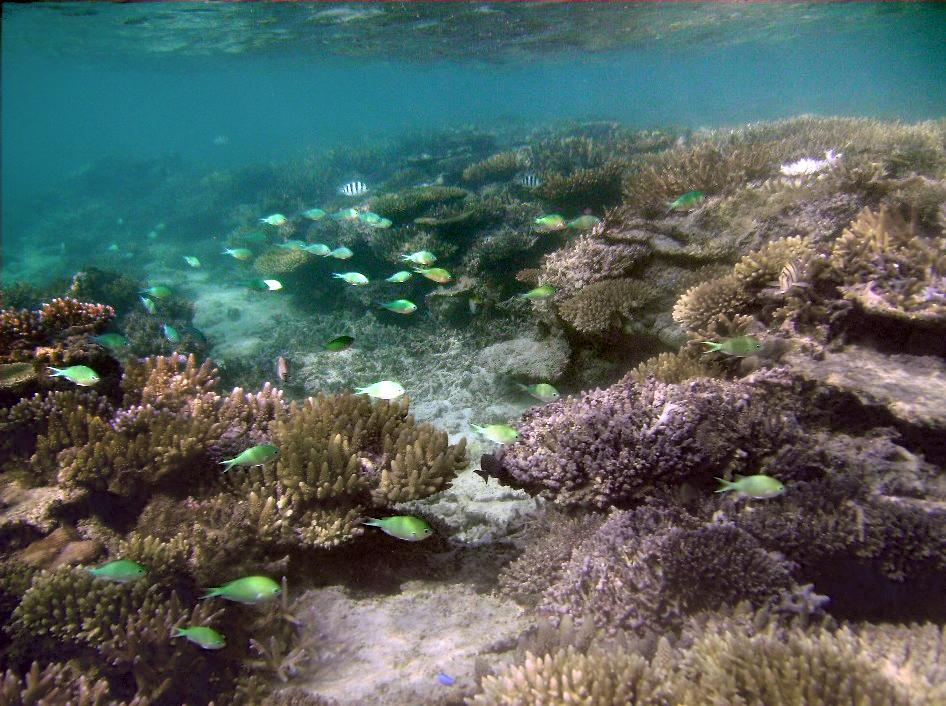 |
Vessel
Input Image 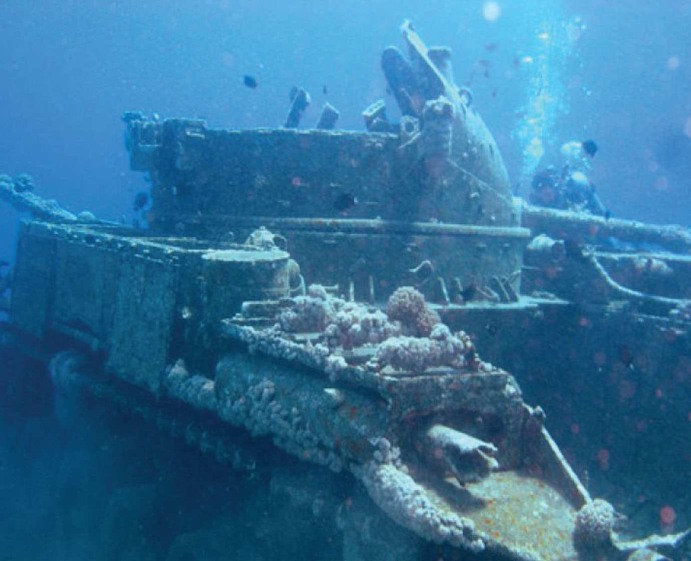 |
|
|
Restoration Methods
|
Output Image 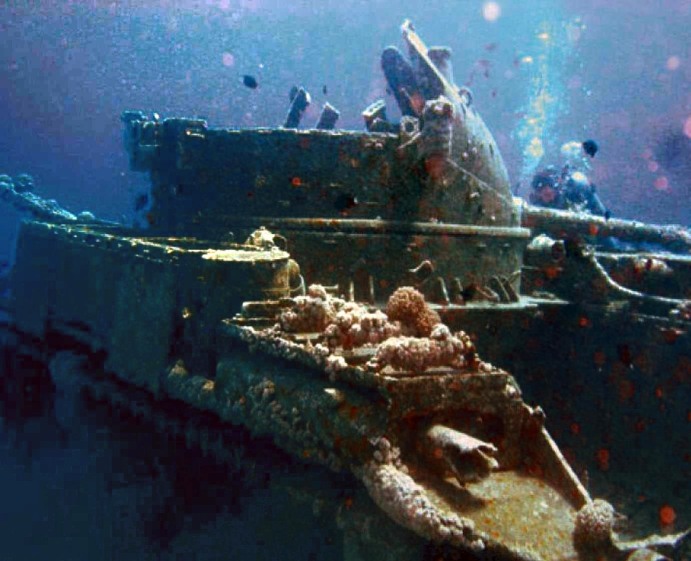 |
Diver
Our method maintains a balance between visibility restoration and noise amplification. As a results, the face of the diver has realistic colors in our result, compared to the others.
Input Image 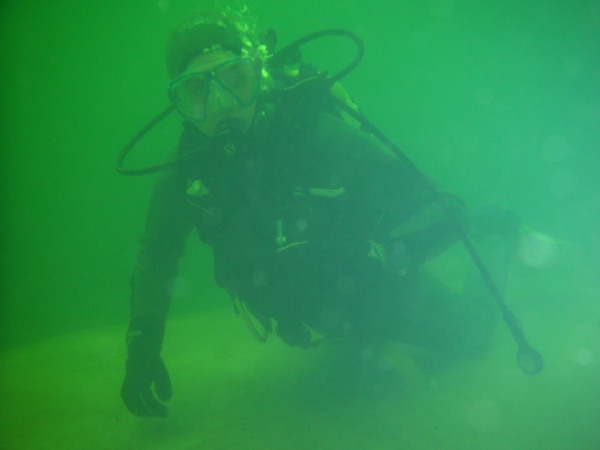 |
|
|
Restoration Methods
|
Output Image 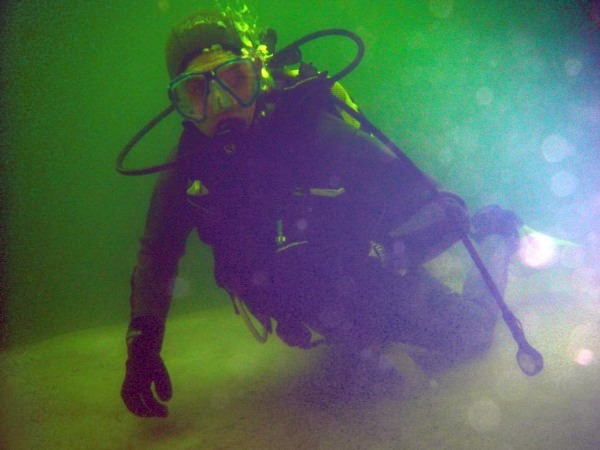 |
References
[Carlevaris-Bianco et al. 2010] N. Carlevaris-Bianco, A. Mohan, and R. M. Eustice. Initial results in underwater single image dehazing. In Proc. IEEE/MTS Oceans, 2010.
[Chiang and Chen 2012] J. Y. Chiang and Y.-C. Chen. Underwater image enhancement by wavelength compensation and dehazing. IEEE Trans. Image Processing, 21(4):1756-1769, 2012.
[Drews et al. 2013] P. Drews, E. Nascimento, F. Moraes, S. Botelho, and M. Campos. Transmission estimation in underwater single images. In Proc. IEEE ICCV Underwater Vision Workshop, pages 825–830, 2013.
[Galdran et al. 2015] A. Galdran, D. Pardo, A. Picón, and A. Alvarez-Gila. Automatic red-channel underwater image restoration. J. of Visual Communication and Image Representation, 26:132-145, 2015.
[Lu at al. 2015] H. Lu, Y. Li, L. Zhang, and S. Serikawa. Contrast enhancement for images in turbid water. JOSA A, 32(5):886–893, 2015.
[Peng et al. 2015] Y.-T. Peng, X. Zhao, and P. C. Cosman. Single underwater image enhancement using depth estimation based on blurriness. In Proc. IEEE ICIP, 2015.
[Berman et al. 2016] D. Berman, T. Treibitz, and S. Avidan. Non-Local Image Dehazing In Proc. IEEE CVPR, 2016.
[Ancuti et al. 2016] C. Ancuti, C. O. Ancuti, C. De Vleeschouwer, R. Garcia, and A. C. Bovik. Multi-scale underwater descattering. In Proc. ICPR, 2016.
[Ancuti et al. 2017] C. O. Ancuti, C. Ancuti, C. De Vleeschouwer, L. Neumann, and R. Garcia. Color transfer for underwater dehazing and depth estimation. In Proc. IEEE ICIP, 2017(All color transfers were done with a single image).
[Ancuti et al. 2018] . O. Ancuti, C. Ancuti, C. De Vleeschouwer, and P. Bekaert. Color balance and fusion for underwater image enhancement. IEEE Transactions on Image Processing, 27(1):379–393, 2018.